







Black garlic, explained
The same bulb as the one in your kitchen, changed by time, warmth and a reaction you already know from toast. Here is how.
White bulbs, aged until black.
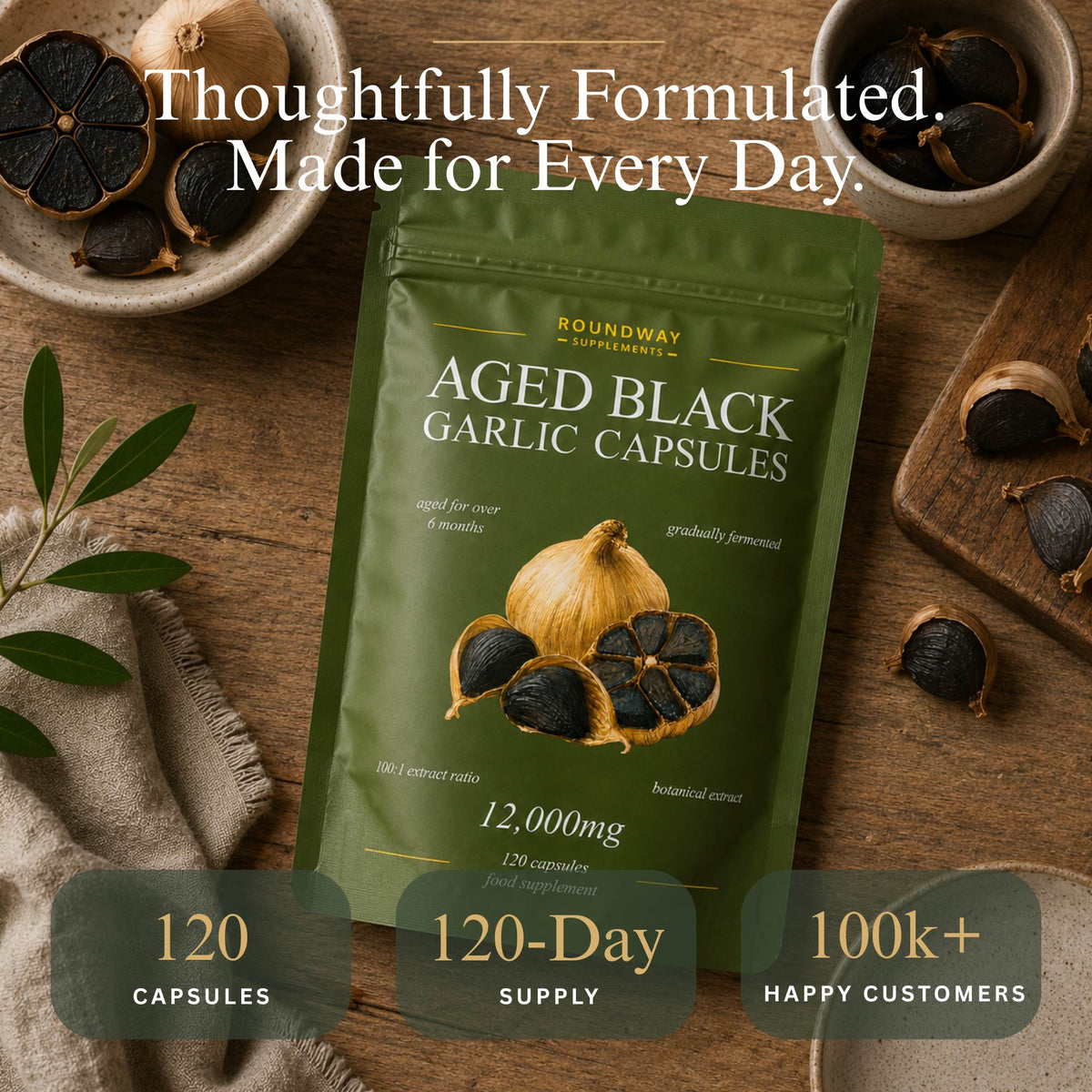
How it worksBlack garlic is ordinary garlic (Allium sativum) held as whole bulbs in warm, humid conditions until the cloves turn black, soft and sweet. Nothing is added: the change comes from the garlic itself.
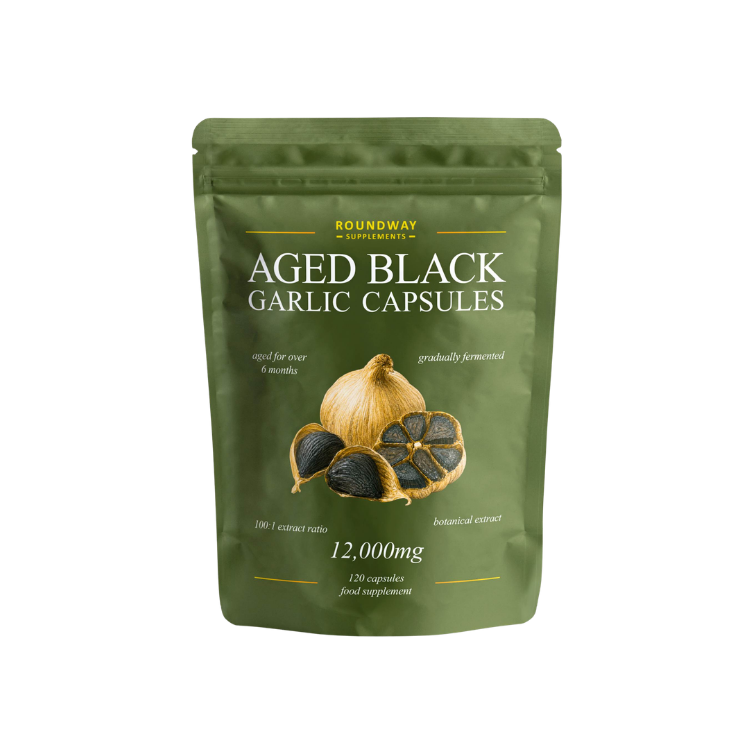
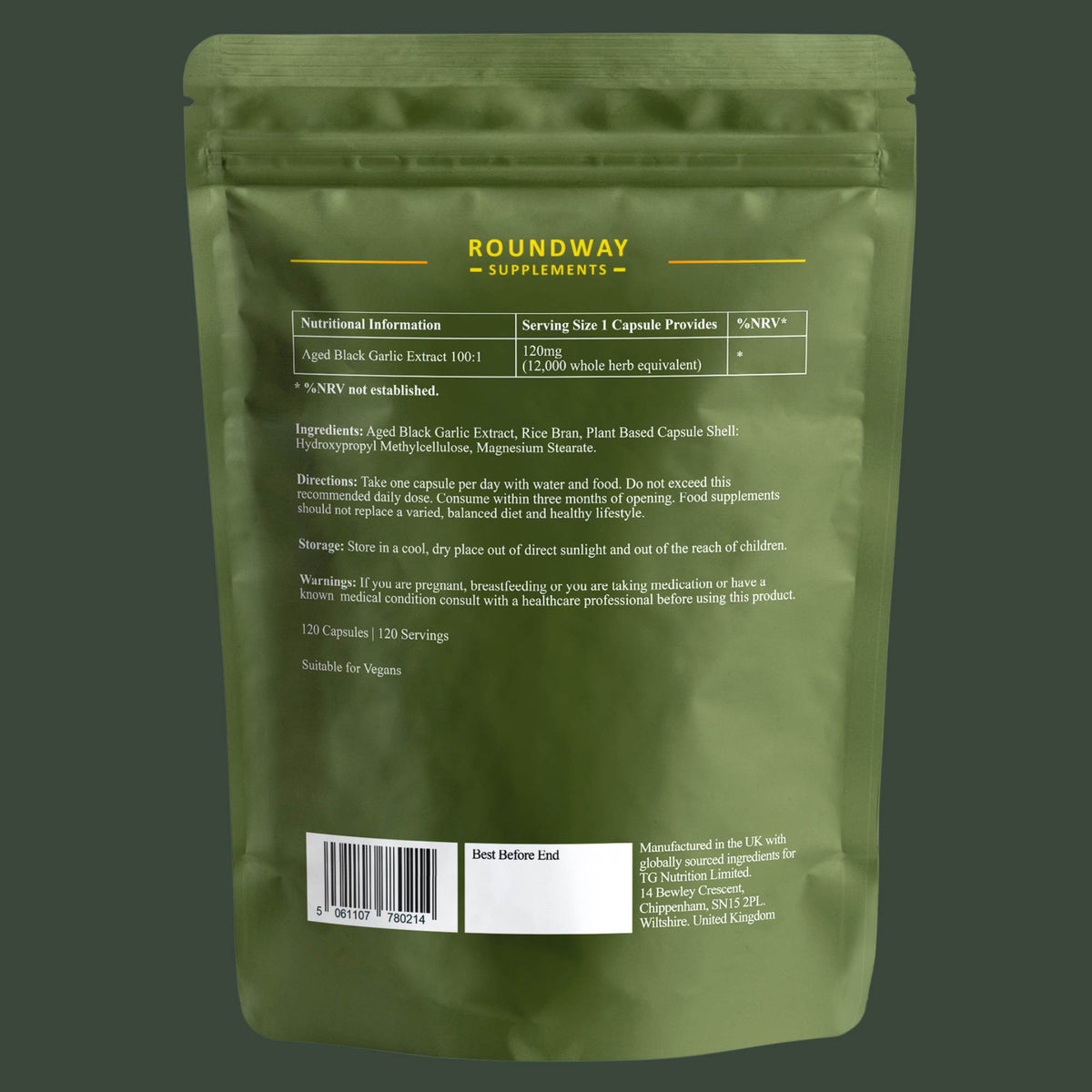
The everyday context120mg aged black garlic extract.
The chemistry that browns toast.
How it worksAs the bulbs age, sugars and amino acids in the cloves react together slowly: the Maillard reaction, named after the French chemist Louis-Camille Maillard, who described it in 1912. It turns the cloves black and changes their flavour from sharp to sweet and mellow.
The everyday context120mg aged black garlic extract.
Why it does not smell like garlic.
How it worksFresh garlic’s sharp smell comes when a crushed clove makes allicin. Ageing changes the cloves’ chemistry, which is why black garlic tastes mild and sweet, and why this extract is odourless in a capsule.
The everyday context120mg extract, equivalent to 12,000mg of aged garlic.