


What is in a binder? Activated charcoal, chlorella and spirulina, explained
A charcoal, chlorella and spirulina binder is a blend of four materials: a carbon, two microalgae and a mineral from bamboo. Here is what each one is, how it is made, why the timing around medicines matters, and how a binder fits the 30-day Wormwood routine.
- In supplement routines, a 'binder' is the name given to a blend usually built on activated charcoal, often with chlorella, spirulina or a mineral such as silica; in cooking, the same word means an ingredient that holds a mixture together.
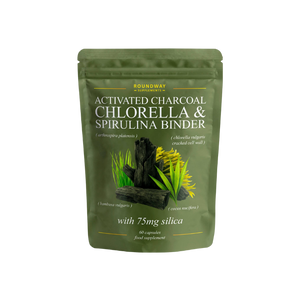
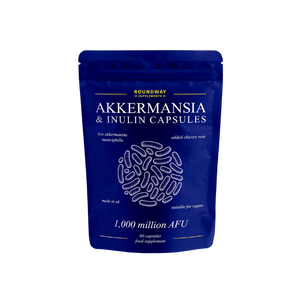
- A charcoal, chlorella and spirulina binder combines activated charcoal made from coconut shell, chlorella (Chlorella vulgaris, a single-celled green freshwater alga), spirulina (Arthrospira platensis, a cyanobacterium) and bamboo silica.
- Spirulina is a food: a blue-green microalga that is 60–70% protein by dry weight, and one of the usual ingredients in a binder blend, rather than a binder in itself.
- Activated charcoal can reduce the absorption of medicines taken at the same time, so leave at least 2 hours between a binder and any medication, and speak to your GP or pharmacist first.
- In the 30-day Wormwood routine, the binder is the evening half of the schedule: 2 capsules at bedtime every night for 30 days, which uses one 60-capsule pack.
One word, two meanings
In a kitchen, a binder is the ingredient that holds a mixture together: the egg in a burger, or the breadcrumbs in a fishcake. In supplement routines, the word has taken on a second life. It is the name people give to a blend usually built on activated charcoal, often with microalgae such as chlorella and spirulina, or minerals such as clay and silica.
You will most often see it next to herbal routines, which is where searches like 'wormwood binder' come from. Here, 'binder' is simply the name of the product category. This piece looks at the materials themselves: what they are, where they come from and how they are made.
Four materials, 475mg in every capsule
Tap through: the whole capsule by weight, then what the bamboo extract is made of.
Activated charcoal 200mg, bamboo silica 100mg, spirulina 100mg and chlorella 75mg: 475mg of ingredients, with charcoal the largest share.
Roundway pack label, per capsule. Shares rounded to the nearest whole number.
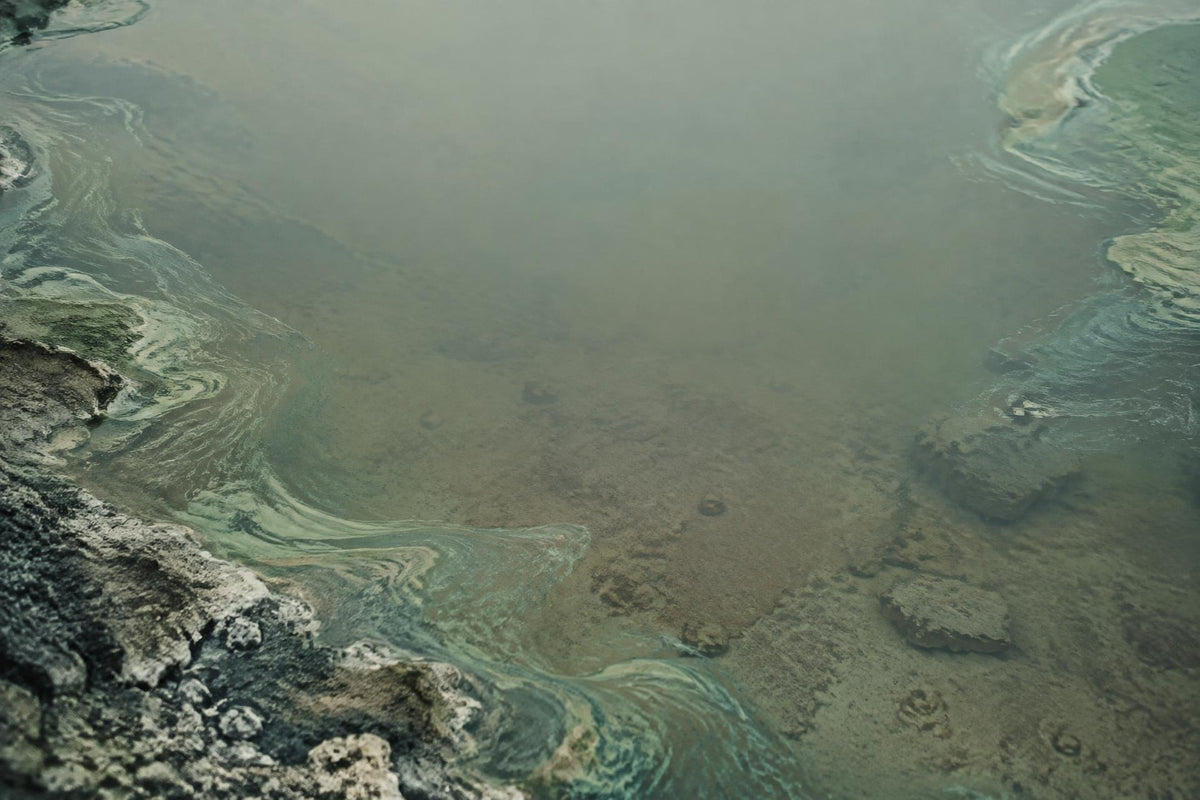
A carbon, a green alga and a blue-green one
Three very different materials, each made in its own way.
A shell, heated, then opened up with steam.
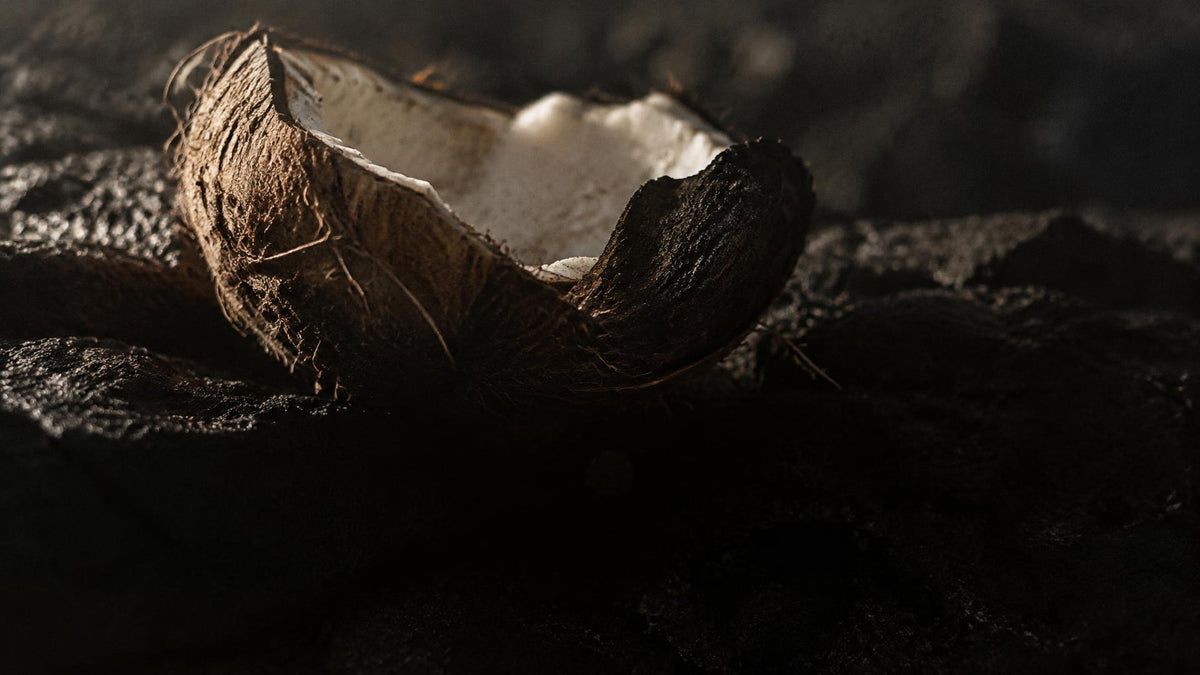
How it worksCharcoal is made by heating carbon-rich material, such as coconut shell, to very high temperatures, around 600–900°C. It is then 'activated' with steam or hot air, which erodes its inner surfaces and opens up a network of tiny pores. That inner surface is what makes the material adsorptive: other molecules can cling to it, which is why the same kind of carbon is used in water filters.
The everyday contextLook for the source of the charcoal, such as coconut shell, and the amount in milligrams.
One tiny cell, one tough wall.
How it worksChlorella vulgaris is a single-celled green alga that lives in fresh water. Each cell is round and only 2–10 micrometres across, with a cup-shaped chloroplast that gives it its deep green colour. Its rigid cell wall is hard to digest, so food-grade chlorella is usually processed to break the wall open, which is what 'cracked cell wall' means.
The everyday context'Cracked cell wall' or 'broken cell wall' describes how the chlorella was processed.
Not quite an alga. A cyanobacterium.
How it worksSpirulina is the common name for Arthrospira platensis, a spiral, thread-like organism that grows in warm, alkaline lakes. It is often called a blue-green alga, but since 1974 it has been classed as a cyanobacterium. Its cell walls contain no cellulose, which is one reason it has long been eaten as a food.
The everyday context'Spirulina' and 'Arthrospira platensis' on a label refer to the same organism.
A huge surface, folded into a small capsule
Typical inner surface area of one gram of activated charcoal, measured in square metres
The same figure for the 200mg in one capsule: roughly 60–90% of a doubles tennis court
The gap to leave between activated charcoal and any medicine, on standard guidance
Olson, Journal of Medical Toxicology, 2010; ITF Rules of Tennis (doubles court 23.77m × 10.97m); MSF Essential Drugs guidance.
Where you already meet these materials
Charcoal biscuits
Charcoal biscuits have been baked in England since the 19th century, and are still sold in the UK today.
Water filters
Many jug and tap filters use activated carbon, often from coconut shell, to improve the taste of water by reducing chlorine.
Black food colour
Vegetable carbon is an approved food colour in the UK, E153, used to colour some black foods.
Food Standards AgencyGreen and blue foods
Spirulina powder colours smoothies and bowls, and spirulina extract gives some sweets their natural blue.
Two algae, very high in protein
Spirulina and chlorella are eaten as foods because so much of their dry weight is protein. Bars show the lower end of each published range.
Habib et al., FAO Fisheries and Aquaculture Circular 1034, 2008; Wang et al., Journal of Food Science, 2024. A capsule holds milligrams, not grams, of each.
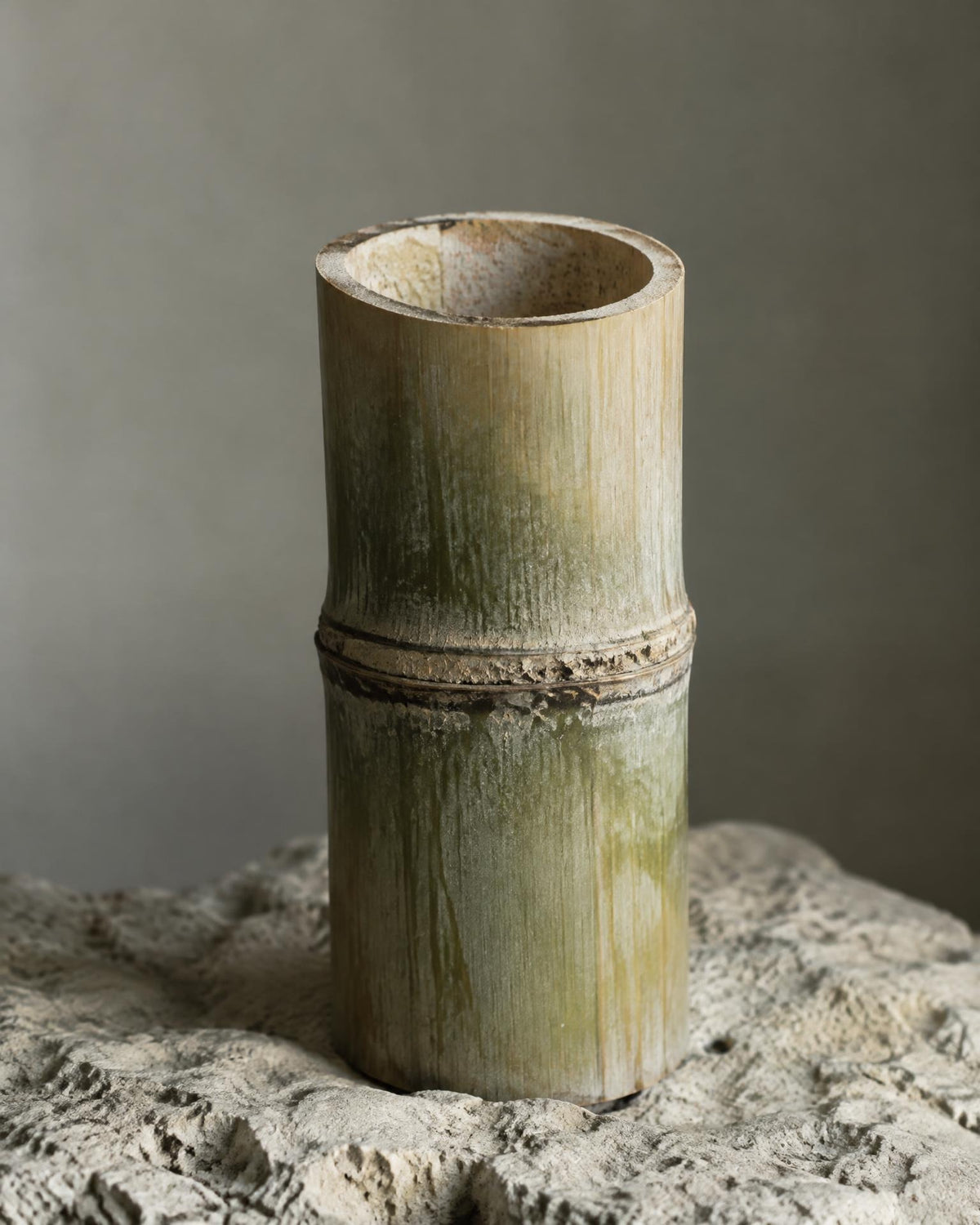
Bamboo, a grass that builds with glass
Bamboo is a giant grass, and like many grasses it takes up silicon from the soil and lays it down as silica, the same compound that makes up sand and quartz. Some bamboos collect it inside their hollow stems as a pale, glassy deposit known for centuries as tabasheer.
Tabasheer interested early chemists too. James Smithson, whose bequest later founded the Smithsonian, published chemical experiments on it with the Royal Society in 1791.
The bamboo silica in a binder is a bamboo extract standardised for its silica content. On the Roundway pack, 100mg of bamboo silica gives 75mg of silica in every capsule.
Is spirulina a binder?
Spirulina is a food: a spiral cyanobacterium that people have eaten for centuries. The Aztecs harvested it from the lakes of the Valley of Mexico, and the Kanembu people living by Lake Chad still dry it on the shore into cakes called dihé, which are sold at local markets.
So spirulina isn't a binder in itself. It is one of the usual ingredients in a binder blend, alongside activated charcoal and chlorella. When people search for spirulina as a binder, they are usually looking at blends like this one, where it sits next to the charcoal rather than replacing it.
Why a binder is kept apart from medicines
Charcoal and medicines can meet
Activated charcoal can reduce the absorption of medicines taken at the same time. In one UK volunteer study, a large dose of charcoal given an hour after paracetamol reduced how much was absorbed by more than half.
Leave 2 hours
Standard guidance is to take activated charcoal at least 2 hours apart from other medicines by mouth. Taking a binder at bedtime keeps it well away from most daytime doses.
Check first
If you take any medication, speak to your GP or pharmacist before you start, and ask which timing suits your medicines.
Where the binder sits in the day
The binder is the evening half of the routine, every night for 30 days. Tick what applies to see the rest of the day.
- The days
Wormwood days and rest days
Wormwood is taken on days 1–5, 7–11, 13–17 and 19–23. Days 6, 12, 18 and 24–30 are rest days, with the binder only.
- Morning
2 Wormwood capsules
With food.
- Evening
1 Wormwood capsule
With food or a snack.
- Bedtime
2 binder capsules
On an empty stomach, every night for all 30 days. Two a night uses one 60-capsule pack.
- Medicines
Keep 2 hours clear
Leave at least 2 hours between the binder and any medicine, and speak to your GP or pharmacist before you start.
Schedule as printed for the Roundway 30-day routine. Nothing you tick is saved or sent.
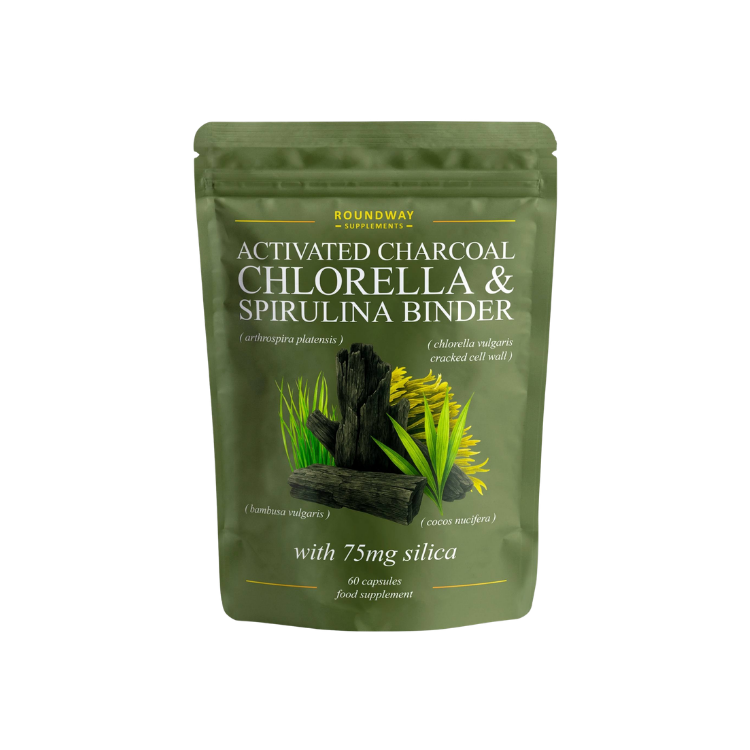
Activated Charcoal, Chlorella, Spirulina Binder
Per capsule: activated charcoal from coconut shell 200mg, bamboo silica 100mg (75mg silica), spirulina 100mg and cracked cell wall chlorella 75mg. 60 capsules. Contains sulphites.
Questions
What is in a charcoal, chlorella and spirulina binder?
Is spirulina a binder?
What is a wormwood binder?
Can I take a binder with my medication?
What is activated charcoal made from?
Food Standards Agency. Approved additives and E numbers (E153, vegetable carbon).
Yeates PJ, Thomas SH. Effectiveness of delayed activated charcoal administration in simulated paracetamol (acetaminophen) overdose. British Journal of Clinical Pharmacology, 2000; 49(1): 11–14.
Médecins Sans Frontières. Essential drugs: activated charcoal, oral (precautions: administer 2 hours apart from other oral drugs).
Olson KR. Activated charcoal for acute poisoning: one toxicologist's journey. Journal of Medical Toxicology, 2010; 6(2): 190–198.
Habib MAB, Parvin M, Huntington TC, Hasan MR. A review on culture, production and use of spirulina as food for humans and feeds for domestic animals and fish. FAO Fisheries and Aquaculture Circular No. 1034, Rome, 2008.
Wang CA, Onyeaka H, Miri T, Soltani F. Chlorella vulgaris as a food substitute: applications and benefits in the food industry. Journal of Food Science, 2024; 89: 8231–8247.
Macie JL (James Smithson). An account of some chemical experiments on tabasheer. Philosophical Transactions of the Royal Society of London, 1791; 81: 368–388. Reprinted in Medical Facts and Observations, 1793.
International Tennis Federation. ITF Rules of Tennis, rule 1: the court (doubles court 23.77m × 10.97m).
Food supplements should not be used as a substitute for a varied diet and a healthy lifestyle.