










A bacterium and a root, explained
One of the newest names in gut science, paired with a fibre from a very old root. Here is what each one is.
A gut bacterium, first named in 2004.
How it worksAkkermansia muciniphila is a bacterium that lives in the human gut. It was first isolated in 2004 by researchers at Wageningen University in the Netherlands, and named after the microbiologist Antoon Akkermans. Muciniphila means mucin-loving: it feeds on mucin, part of the mucus that lines the gut.
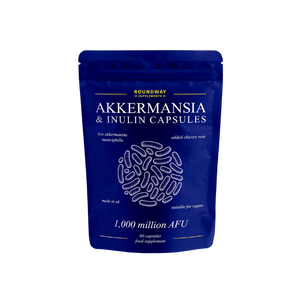
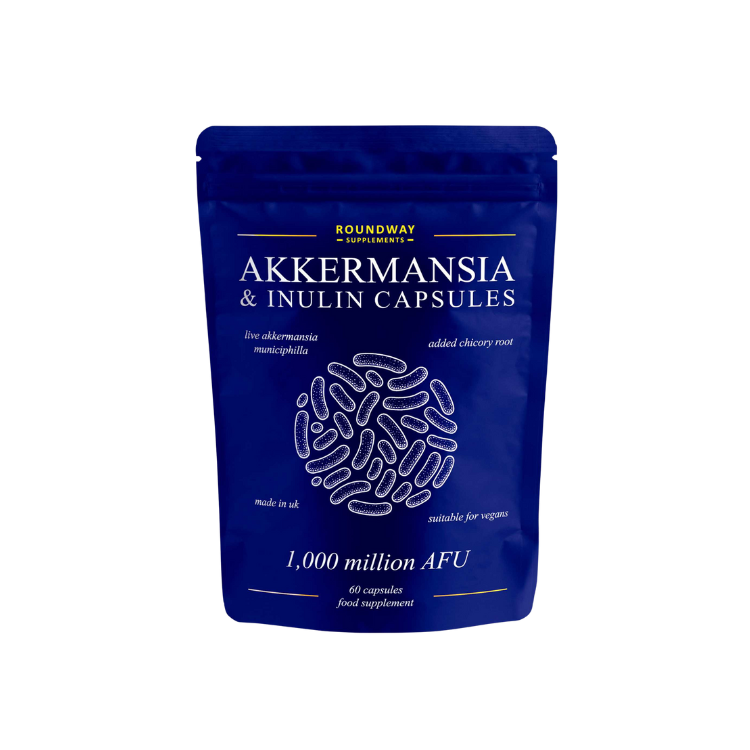
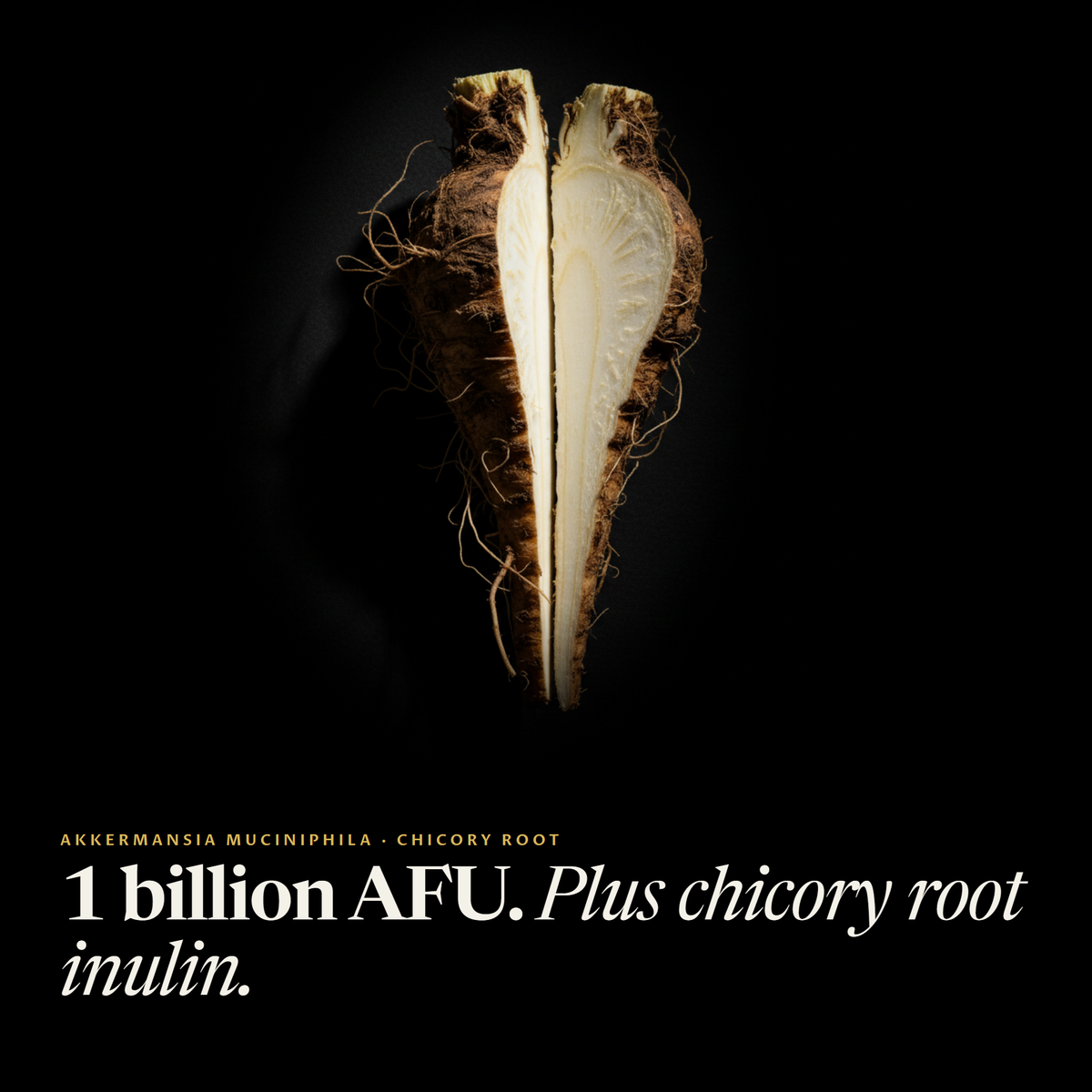
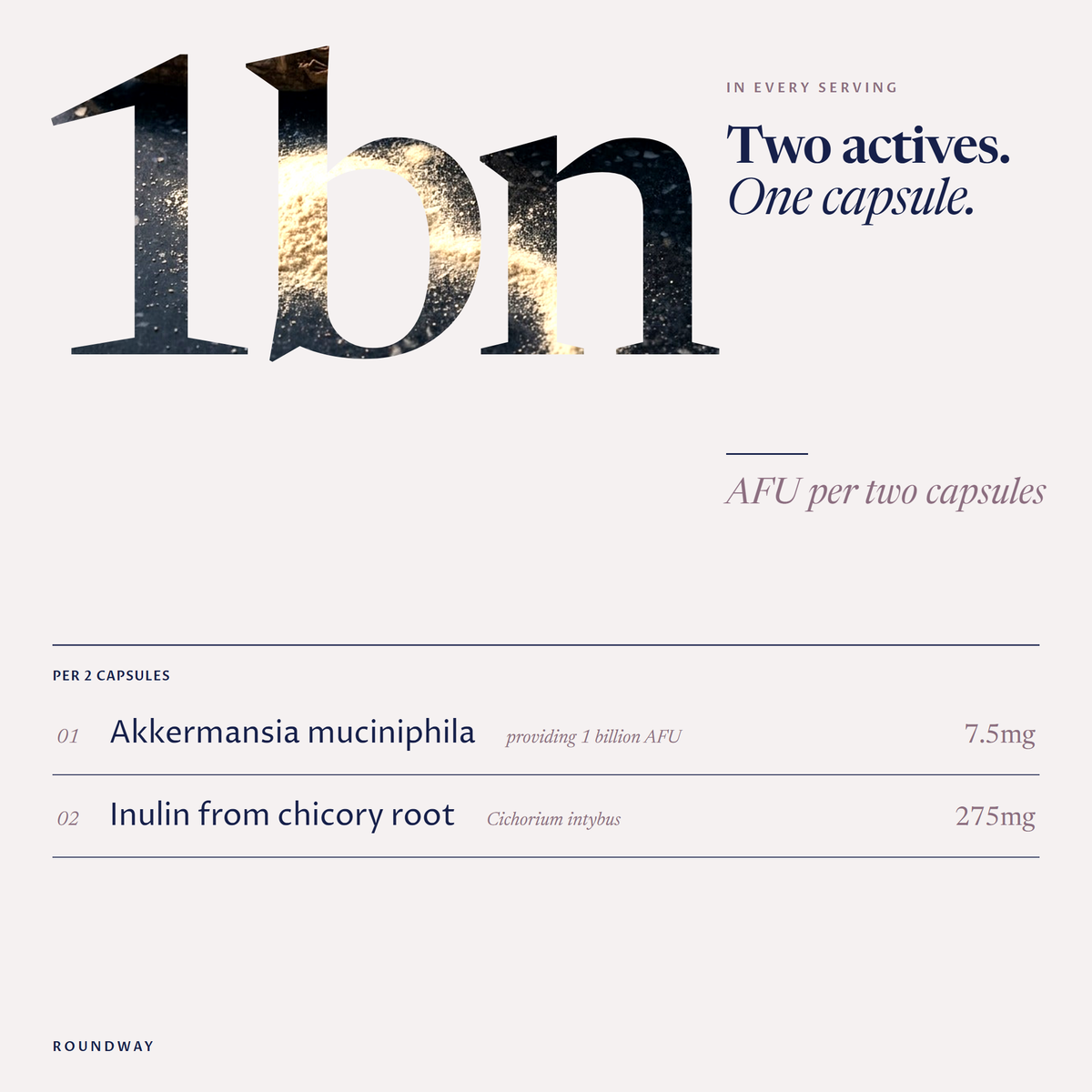
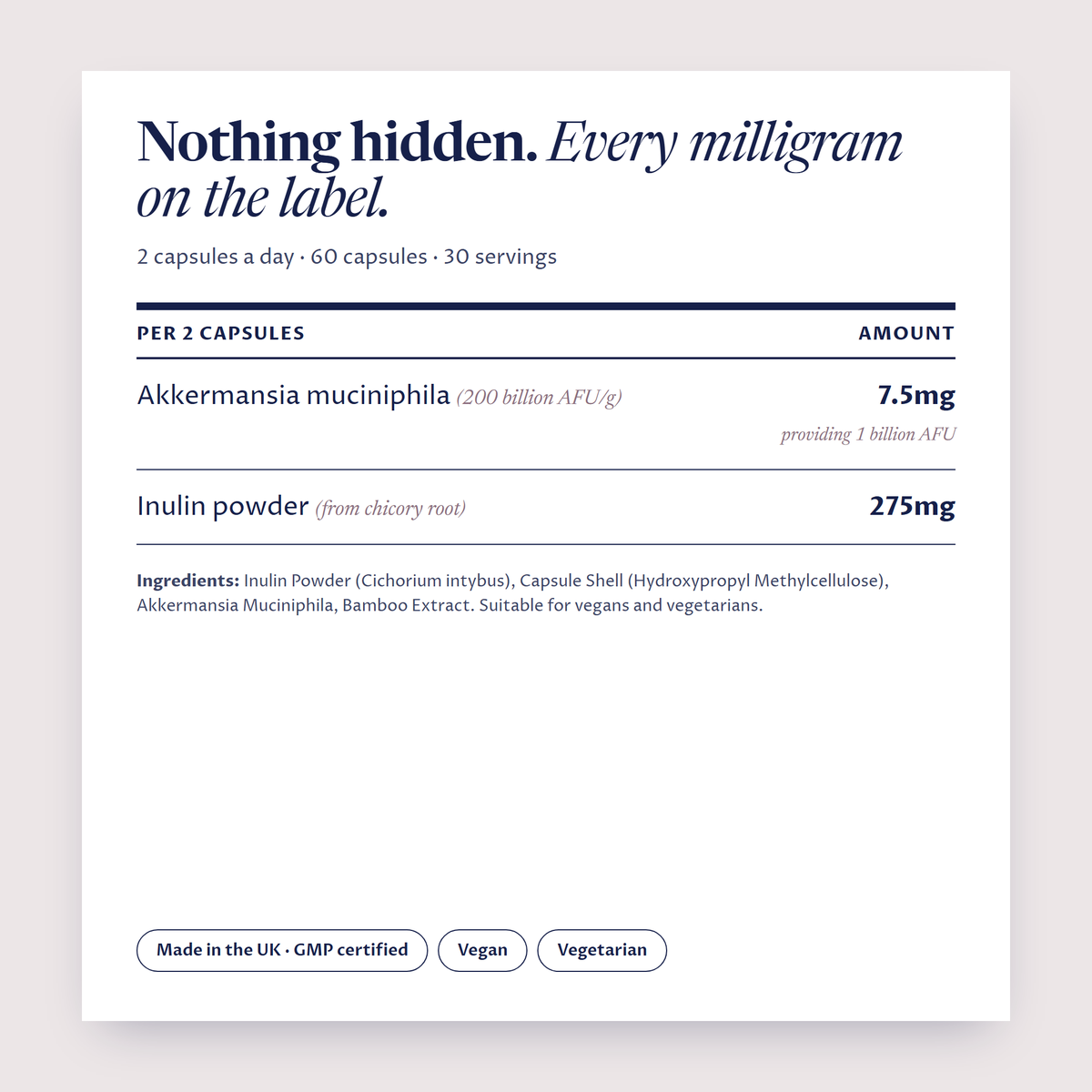
The everyday contextAkkermansia muciniphila, providing 1 billion AFU.
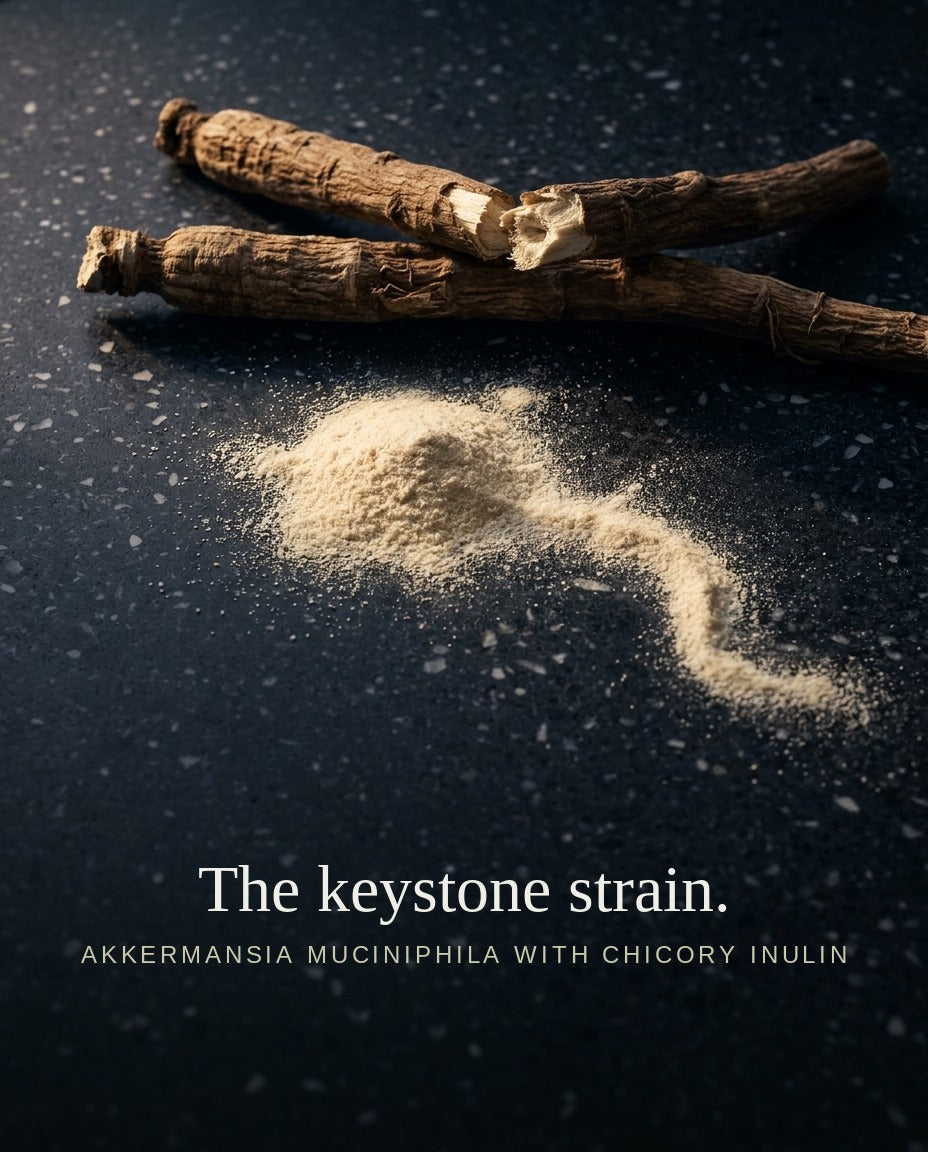
A fibre from a coffee-substitute root.
How it worksInulin is a fibre made of chains of fructose. It is found in many plants, but chicory root (Cichorium intybus) is one of the richest sources, which is why it is the usual starting point. Inulin passes through the small intestine without being digested.
The everyday context275mg inulin from chicory root.
Why the label says AFU.
How it worksBacteria in supplements are usually counted in one of two ways. CFU (colony-forming units) counts the colonies that grow on a lab plate. AFU (active fluorescent units) counts individual cells with a laser, using flow cytometry. Akkermansia is hard to grow on plates, so it is counted in AFU.
The everyday context1 billion AFU of Akkermansia muciniphila.