


Oyster and zinc, explained
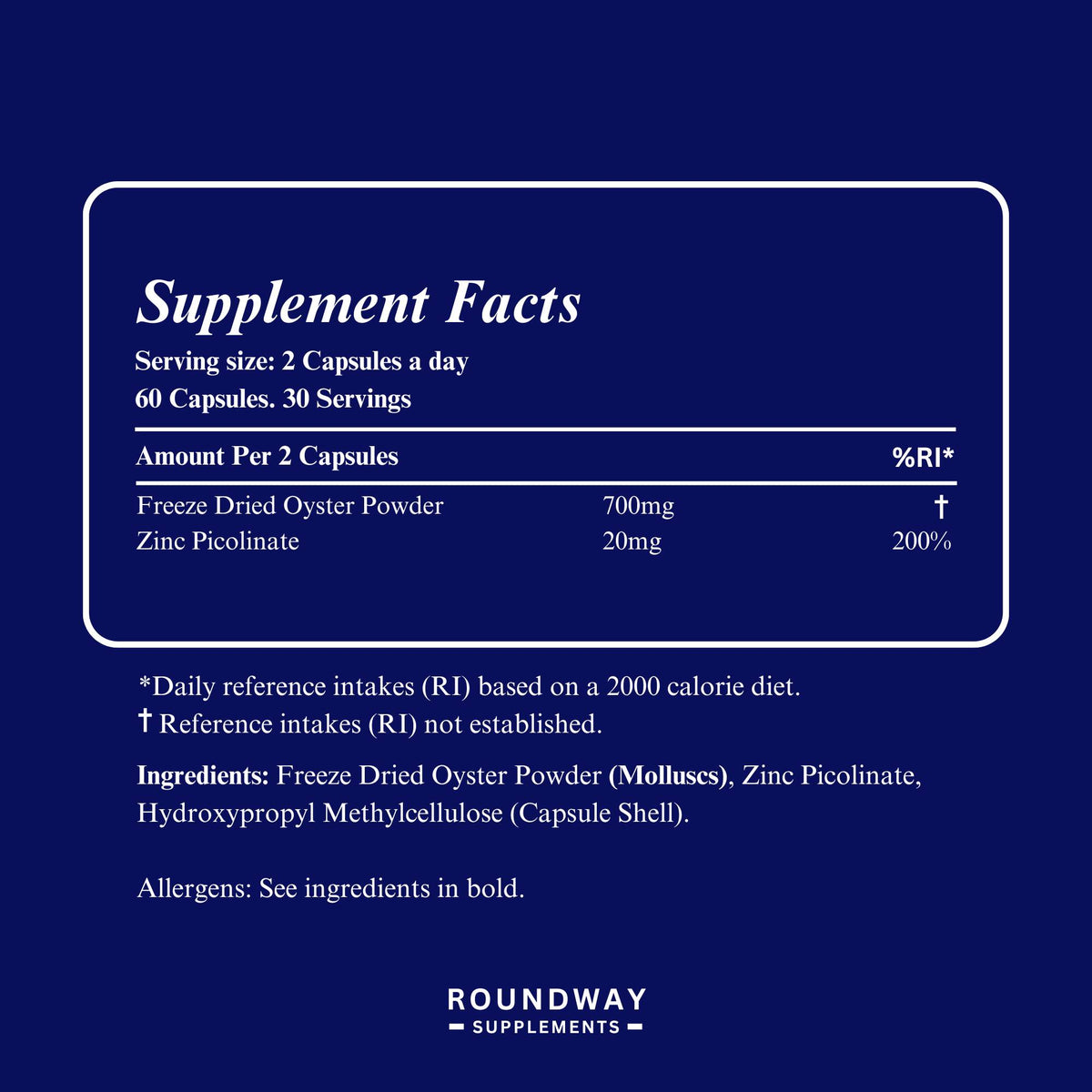
A whole food from the sea, dried without heat, and a mineral bound to a natural acid. Here is what is in two capsules.
A filter feeder from the shoreline.
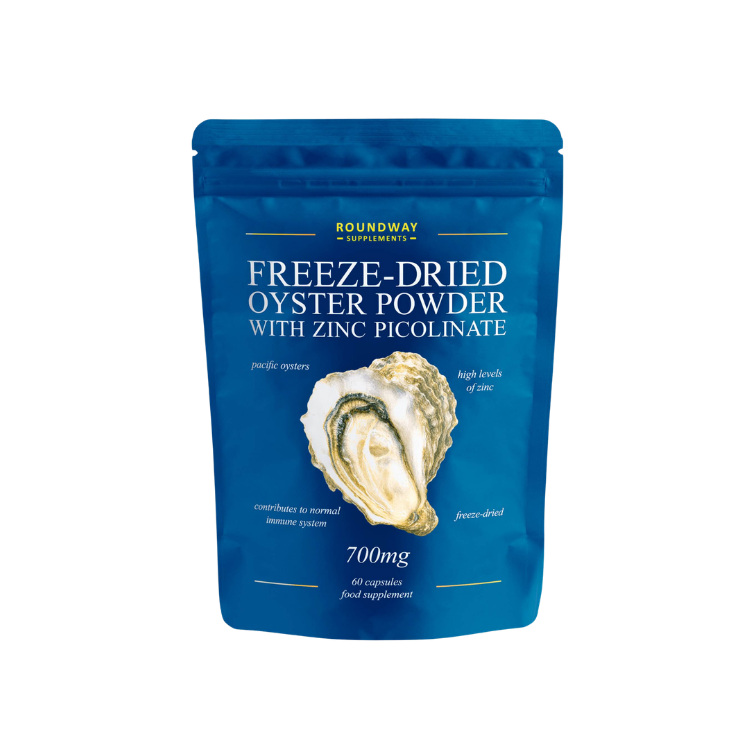
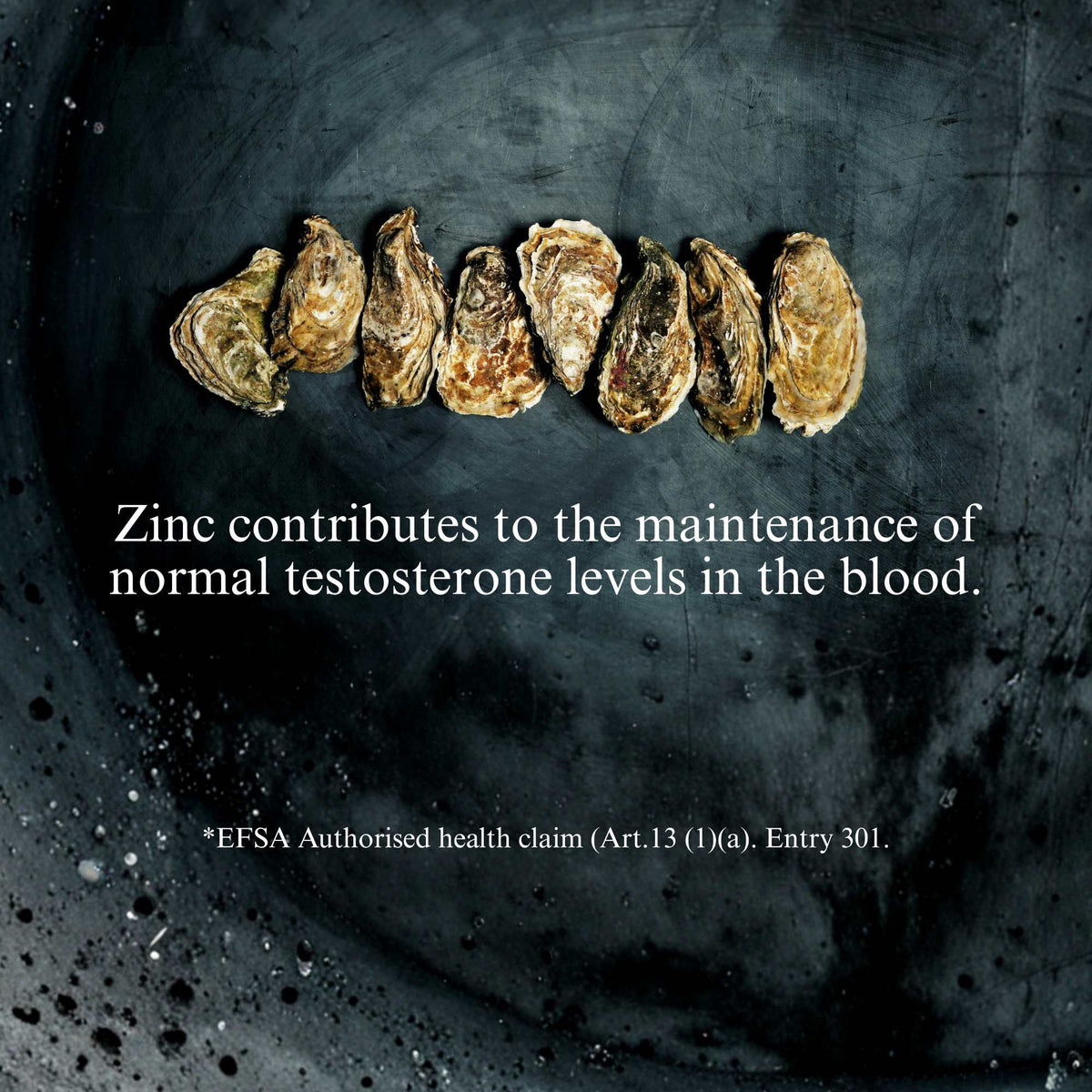
How it worksPacific oysters are shellfish farmed in coastal waters around the world, including Britain. They feed by filtering the water around them. Oysters are one of the richest food sources of zinc, which is why they are paired with it here.
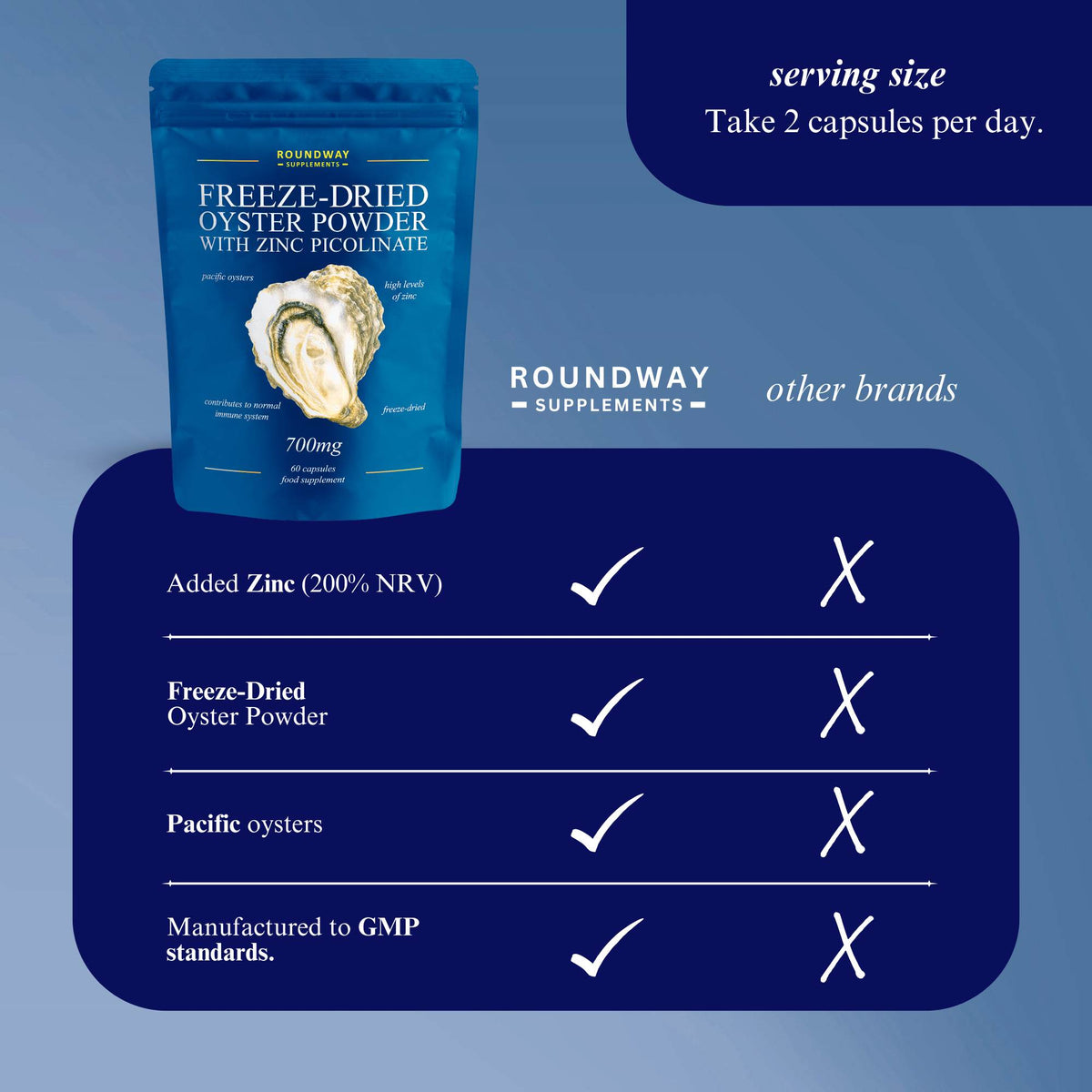
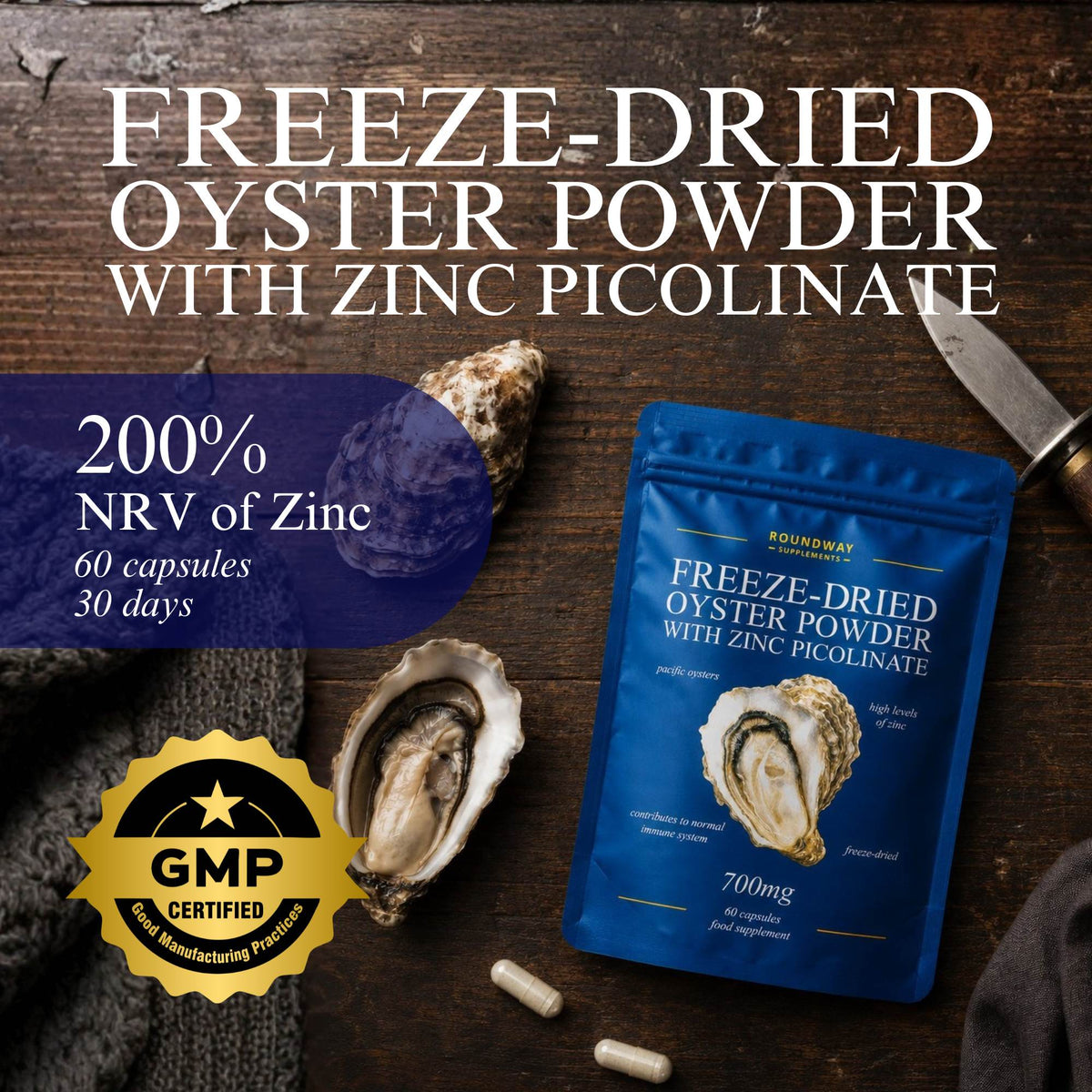
The everyday context700mg freeze-dried Pacific oyster powder.
Drying without heat.
How it worksFreeze-drying removes water from frozen food under a vacuum, so the ice turns straight to vapour without melting. It is the same process used for instant coffee and space food, and it leaves a light, dry powder.
The everyday context700mg freeze-dried oyster powder.
Zinc, bound to picolinic acid.
How it worksZinc picolinate is zinc joined to picolinic acid, a natural organic acid. The UK reference nutrient intake for zinc is 9.5mg a day for men and 7mg for women, and the nutrient reference value used on labels is 10mg.
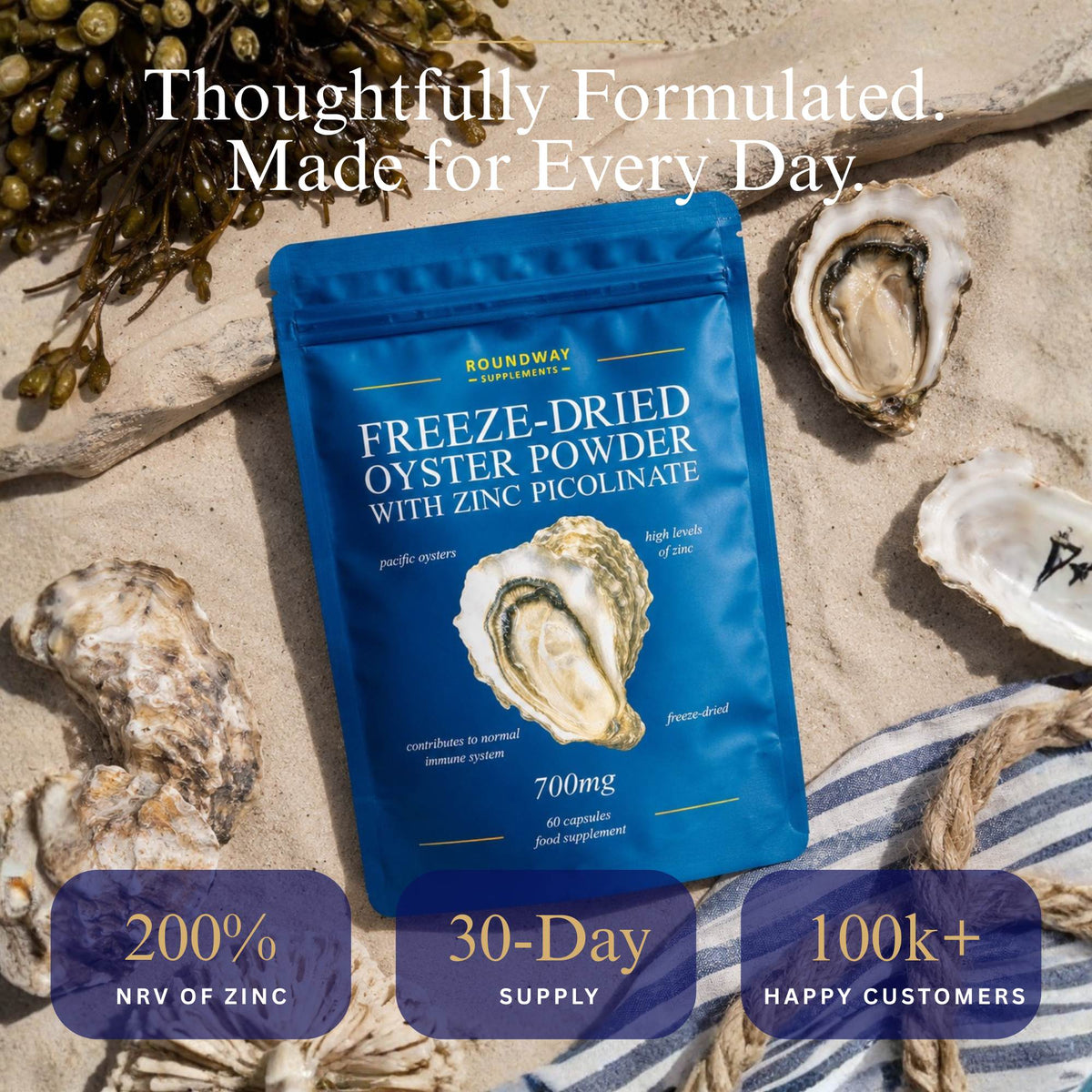
The everyday context20mg zinc picolinate (200% NRV, as labelled).