


How to read a wormwood, black walnut and clove label
Three plants, one capsule, and a label that can be laid out in several ways. Here is what each botanical is and where it comes from, how it was used in the past, and how to read milligrams per capsule against milligrams per serving, capsules against drops, and one product against another.
- A wormwood, black walnut and clove label lists three plants: wormwood (Artemisia absinthium), black walnut hull (Juglans nigra) and clove bud (Syzygium aromaticum), each with its own amount in milligrams.
- The most important thing to check is whether the amounts are per capsule or per serving, because some products need two or three capsules to reach the figures on the front of the pack.
- Capsules usually contain dried plant powder measured in milligrams, while drops are liquid extracts measured in millilitres, with a ratio such as 1:5 that tells you how much plant went into each millilitre.
- To compare products, line up the Latin names, the plant parts, the form (powder or extract), the amount per daily serving and the number of days a pack lasts.
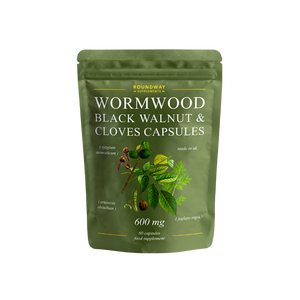
- Roundway's capsules contain 200mg each of wormwood, black walnut hull and clove, 600mg of botanicals in one vegan capsule, with 60 capsules taken one a day.
Why this label is worth reading slowly
Most single-ingredient labels have one number to find. A wormwood, black walnut and clove product has at least three, and sometimes six: an amount for each plant, perhaps per capsule and per serving, perhaps as a powder and as an extract equivalent.
None of that is complicated once you know where to look. UK food supplement labels must state the portion recommended for daily consumption and the amount of each ingredient in that portion, so the figures you need are always there. The trick is knowing which ones to put side by side.
A herb, a hull and a flower bud
Each name on the label is a different plant, and a different part of it. Tap one to see what it is.
A silvery, bitter herb.
How it worksWormwood, Artemisia absinthium, is a silvery-grey perennial in the daisy family, native to temperate Europe and Asia. The leaves and flowering tops are dried and powdered. It is famously bitter, and its essential oil contains thujone, a natural compound whose levels in food and drink are limited by law in the UK.
The everyday contextLook for Artemisia absinthium, the plant part (herb or aerial parts) and whether it is a powder or an extract.
The green hull, not the nut.
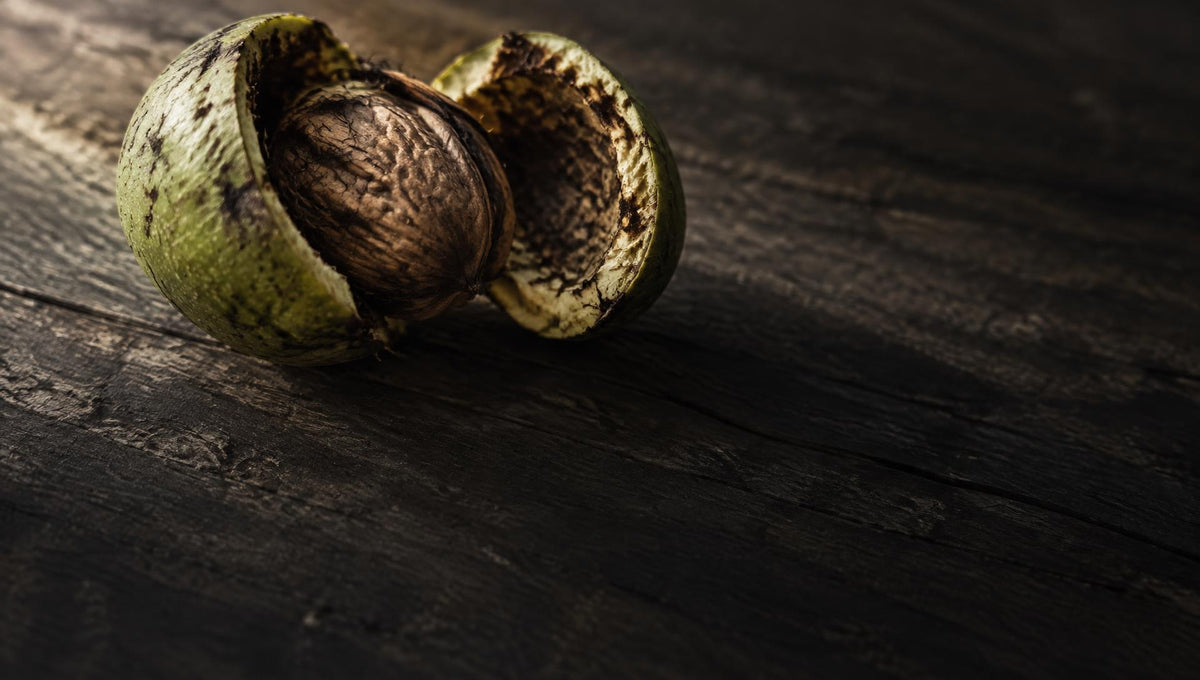
How it worksBlack walnut, Juglans nigra, is a hardwood tree of eastern North America. Supplements use the hull: the green outer husk around the shell. The hull is rich in juglone, a natural compound, and walnut husks have long been used as a source of brown and black dye.
The everyday contextCheck it says 'hull' or 'husk'. Black walnut leaf and English walnut (Juglans regia) are different materials.
A dried flower bud.
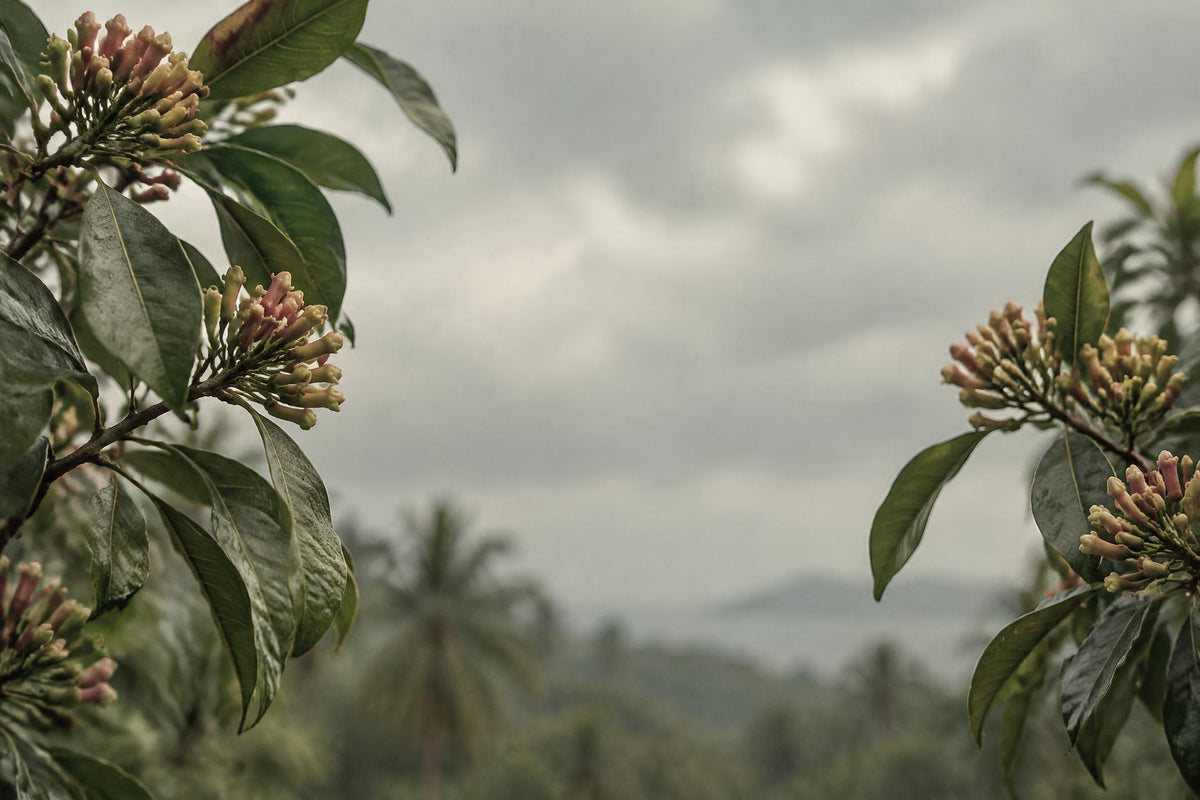
How it worksCloves are the dried, unopened flower buds of Syzygium aromaticum, an evergreen tree native to the Maluku Islands of Indonesia. Up to 18% of a clove bud is essential oil, and around 89% of that oil is eugenol, the compound behind clove's warm, familiar aroma.
The everyday contextLook for Syzygium aromaticum and 'bud'. Clove oil is a different, far more concentrated material.
Three plants with long pasts
Wormwood in the ancient texts
Wormwood appears in the Hippocratic writings of the 5th and 4th centuries BCE, and Dioscorides gave the first botanical description in the 1st century CE. John Gerard described ten kinds in his English Herbal of 1597.
AHPA, Herbs in History: WormwoodFrom aperitif to absinthe
Its bitterness made wormwood a flavouring for centuries, most famously in absinthe, the anise-flavoured spirit of 19th-century Paris. Today, thujone levels in food and drink are capped by law.
Regulation (EC) No 1334/2008, Annex IIIBlack walnut as a dye
Walnut husks have been a dye source since Roman times. In North America, the Meskwaki people of the Great Lakes made a black dye from black walnut.
Liu et al., Frontiers in Environmental Science, 2022Clove and the spice trade
Cloves come from the Maluku Islands, long known in Europe as the Spice Islands, and the trade in them helped shape the economies of the region for centuries.
Cortés-Rojas et al., 2014The number on the front isn't always one capsule
Find the serving
The label must say how many capsules make the recommended daily portion. If a serving is two or three capsules, the amounts on the nutrition table are usually for the whole serving, not one capsule.
Work back to one capsule
Divide each amount by the number of capsules in a serving. 600mg of wormwood in a three-capsule serving is 200mg per capsule; 200mg in a one-capsule serving is also 200mg per capsule.
Then count the days
Divide the capsules in the pack by the capsules in a serving. 60 capsules at one a day last 60 days; 90 capsules at three a day last 30. That is the fair basis for comparing price.
One capsule, three botanicals
Each of wormwood, black walnut hull and clove powder in every capsule
Total botanicals per capsule, which is also the daily serving at one capsule a day
60 vegan capsules taken one a day, so one pack lasts two months
Pack label, Roundway Wormwood, Black Walnut & Cloves.

Milligrams of powder, millilitres of extract
Capsules usually hold dried, powdered plant, so the label gives a weight: 200mg of wormwood is 200mg of dried wormwood. Drops are liquid extracts, or tinctures, made by steeping the plant in a solvent such as alcohol, and the label gives a volume and a ratio instead.
A ratio of 1:5 means 1g of dried plant for every 5ml of liquid, so 1ml of a 1:5 tincture was made from 200mg of plant. The European herbal monograph for wormwood, for example, describes a 1:5 tincture in 70% alcohol. To compare drops with capsules, find the ratio, convert the daily millilitres to milligrams of plant, and check the solvent, especially if you avoid alcohol.
Is your label giving you the full picture?
Tick what you can find on the label in front of you.
Start with the nutrition table on the back of the pack: the amounts and the daily serving are always printed there.
Nothing you tick is saved or sent.
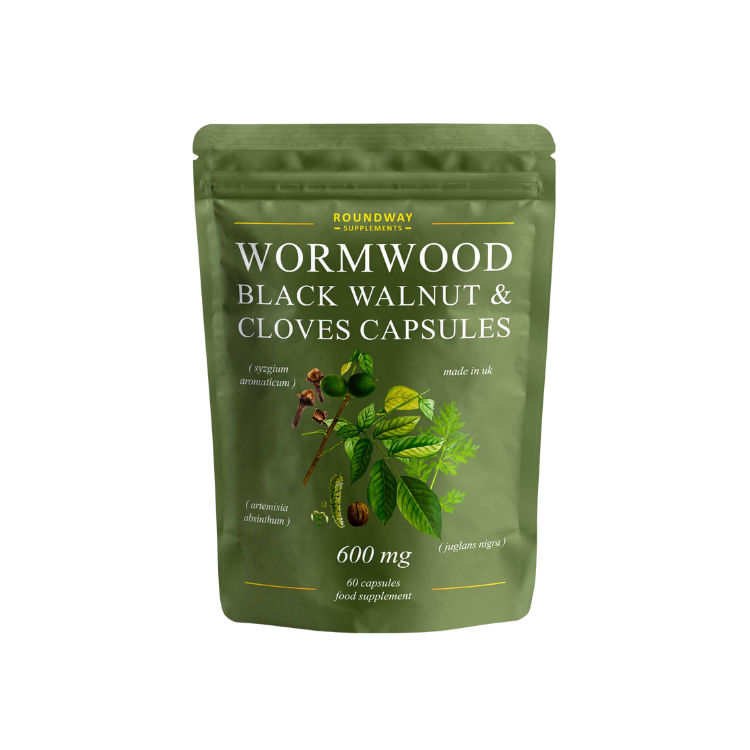
Wormwood, Black Walnut & Cloves Capsules
Per capsule: 200mg wormwood (Artemisia absinthium), 200mg black walnut hull (Juglans nigra) and 200mg clove (Syzygium aromaticum). One capsule a day. 60 vegan capsules.
Questions
How much wormwood, black walnut and clove is in each capsule?
What is the difference between mg per capsule and mg per serving?
Are wormwood drops stronger than wormwood capsules?
Why does the label say black walnut hull?
What is thujone on a wormwood label?
How long does a 60-capsule pack last?
The Food Supplements (England) Regulations 2003 (SI 2003/1387), regulation 6: labelling.
Regulation (EC) No 1334/2008 on flavourings and certain food ingredients with flavouring properties, Annex III, as retained in UK law.
European Medicines Agency, HMPC. Public statement on the use of herbal medicinal products containing thujone (EMA/HMPC/732886/2010 Rev. 1). ema.europa.eu.
European Medicines Agency, HMPC. European Union herbal monograph on Artemisia absinthium L., herba, 2017.
Touwaide A, Appetiti E. Herbs in History: Wormwood. American Herbal Products Association, 2023.
Cortés-Rojas DF, de Souza CRF, Oliveira WP. Clove (Syzygium aromaticum): a precious spice. Asian Pacific Journal of Tropical Biomedicine, 2014; 4(2): 90–96.
Liu S, Cheng S, Jia J, Cui J. Resource efficiency and environmental impact of juglone in Pericarpium Juglandis: a review. Frontiers in Environmental Science, 2022; 10.
NHS. Worms in humans.
Food supplements should not be used as a substitute for a varied diet and a healthy lifestyle.