



Natural GLP-1 Supplements: The Gut, Fibre and Probiotic Angle
Natural GLP-1 supplements: the gut, fibre and probiotic angle
Nearly six million UK adults are now taking, or have taken, a GLP-1 medication. Far fewer are talking about what's happening in the gut while they do, or what natural levers exist for the people who can't, or don't want to, take one.
This is a plain-English guide to GLP-1 supplements, how the gut produces its own GLP-1 hormone, and why fibre and probiotics keep coming up in the same conversation.
What is GLP-1, in one paragraph
GLP-1, or glucagon-like peptide-1, is a hormone your gut makes after you eat. It tells the pancreas to release insulin, slows how quickly your stomach empties, and signals fullness to the brain. Drugs like Ozempic, Wegovy and Mounjaro are synthetic versions designed to mimic this hormone at much higher, longer-lasting doses.
Can a supplement actually raise GLP-1 naturally
Not in the same way the medication does. No tablet replicates a weekly injection. What certain nutrients can do is support the body's own GLP-1 response after meals, mostly by feeding the bacteria in your large intestine that produce the short-chain fatty acids, particularly butyrate, that trigger GLP-1 release.
The ingredients with the most credible evidence sit in three groups:
- Prebiotic fibres such as inulin, acacia and Jerusalem artichoke. These reach the colon intact and feed the bacteria that produce butyrate.
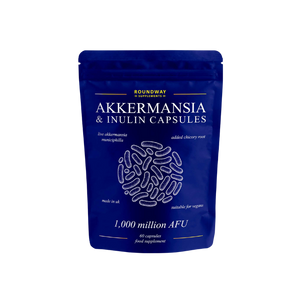
- Probiotic strains such as Akkermansia muciniphila, Lactobacillus rhamnosus and Bifidobacterium species, which are linked in early research to GLP-1 response, gut barrier function and weight regulation.
- Plant compounds such as berberine, green tea catechins and Yerba mate, often marketed as natural GLP-1 supplements. The evidence is mixed and the effect sizes small.
Why the gut keeps coming up in the GLP-1 conversation
GLP-1 medications work, in part, by slowing the gut on purpose. That is the point. The trade-off is that almost every reported side effect is digestive: constipation, bloating, reflux, nausea, sluggish transit. People also eat much less, which means much less fibre, which means the bacteria that produce butyrate, and your own GLP-1, get fed less too.
This is the gap a well-formulated probiotic with prebiotic fibre is trying to fill. Not as a replacement. As a companion.
What to look for in a GLP-1 supplement
Named strains, not blends
If a label says "probiotic blend" without naming the strains and their clinical codes, you cannot check the research. Look for strains written like Lactobacillus rhamnosus GG or Bifidobacterium lactis BB-12.
Real prebiotic fibre, not a sprinkle
A few hundred milligrams of inulin is mostly decorative. Useful daily amounts of prebiotic fibre sit in the gram range, ideally from more than one source so you feed a wider range of bacteria.
A dose that actually arrives
CFU counts on the front of the pack only matter if the capsule survives stomach acid. Delayed-release capsules or acid-resistant strains do the work.
UK-made, third-party tested
For something you take daily, UK manufacture and independent testing on potency and contaminants is the baseline, not a bonus.
Where Core Biotic fits
Core Biotic is our daily probiotic, built for the people asking these questions. Ten named strains at 60 billion CFU, paired with three prebiotic fibres, in a delayed-release capsule. One a day. Made in the UK, vegan, no fillers.
It is not a GLP-1 drug, and we will never market it as one. It is a daily probiotic designed to support the gut environment that produces your own GLP-1, whether you are on a medication, transitioning off one, or simply trying to look after the system without one.
Frequently asked questions
Do natural GLP-1 supplements work for weight loss
On their own, no, not at the scale a prescription GLP-1 does. The honest answer is that prebiotic fibre and certain probiotic strains can support appetite regulation and metabolic health as part of a broader diet, but anyone selling you a capsule as an Ozempic alternative is overselling it.
Can I take a probiotic alongside Ozempic, Wegovy or Mounjaro
Most people can, and many gastroenterologists actively suggest probiotic and fibre support to ease the constipation and bloating these medications cause. Always check with your prescriber, particularly in the dose-escalation phase.
What is the best probiotic for gut health and weight management
The most evidence sits with multi-strain formulas that include Lactobacillus and Bifidobacterium species, paired with real amounts of prebiotic fibre. Single-strain, single-ingredient pills tend to underperform.
How long until I feel a difference
Digestive comfort often shifts in the first one to two weeks. The metabolic and microbiome effects take longer, usually eight to twelve weeks of daily use.
Are natural GLP-1 supplements safe
Probiotics and prebiotic fibre are well-tolerated by most adults. Plant-derived GLP-1 ingredients like berberine can interact with prescription medication, so check with a pharmacist if you are on anything regular.
This article is for general information and is not medical advice. Always speak to your GP or prescriber before starting, stopping or changing any medication, including GLP-1 receptor agonists such as Ozempic, Wegovy or Mounjaro.
