





Two enzymes and two extracts, explained
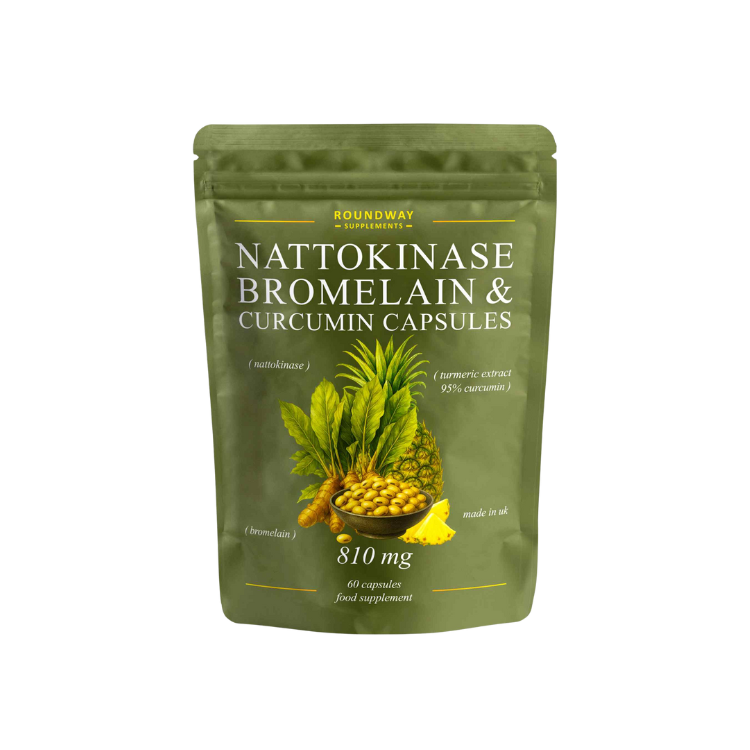
An enzyme from a Japanese food, an enzyme from pineapple, and two spice extracts. Here is what each one is, and how it is measured.
An enzyme from fermented soybeans.
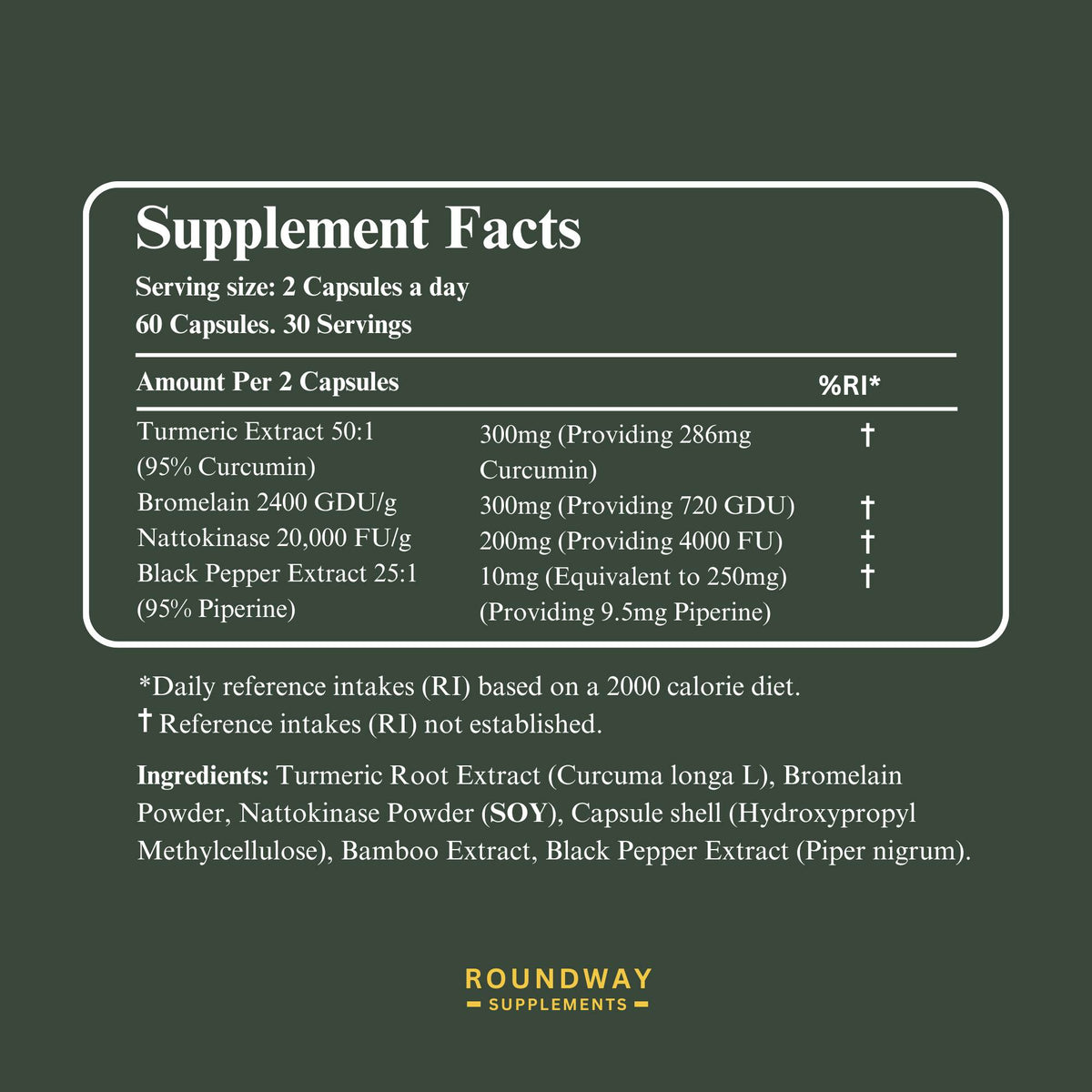
How it worksNatto is a traditional Japanese food of soybeans fermented with Bacillus subtilis natto. In 1987, researcher Hiroyuki Sumi identified an enzyme in it and named it nattokinase. Enzymes are measured by activity rather than weight: ours is 20,000 fibrin units (FU) per gram.
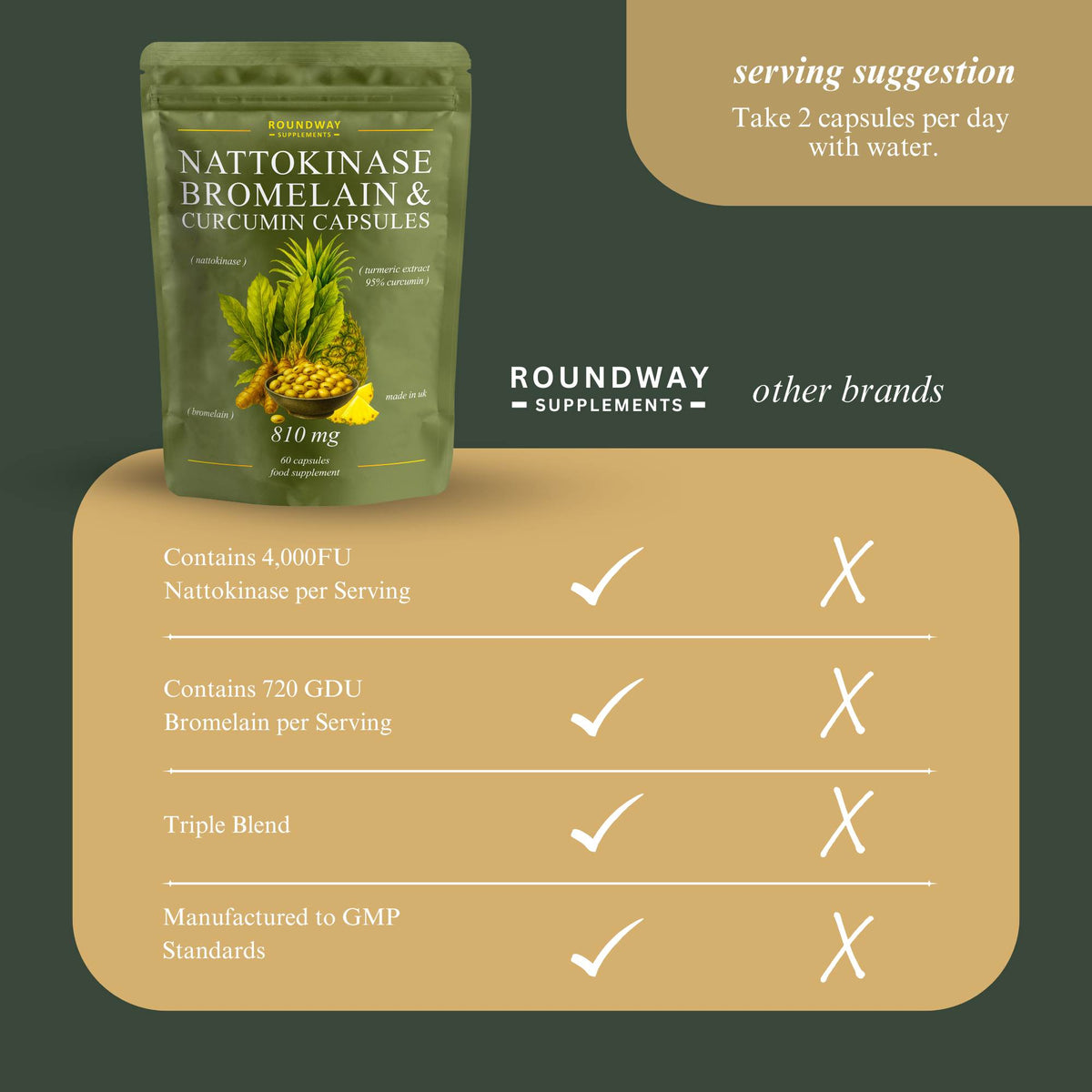
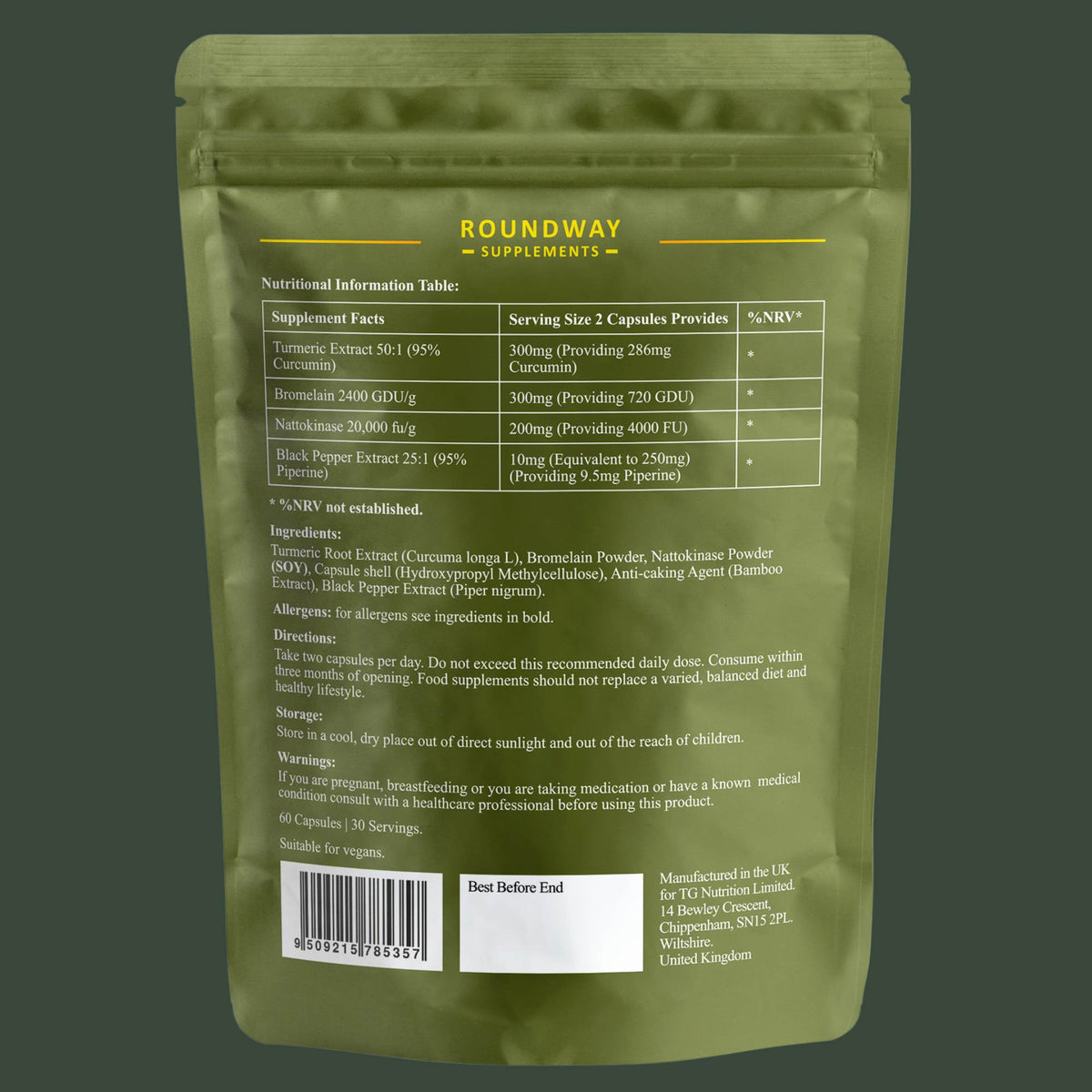
The everyday context200mg nattokinase, providing 4,000 FU.
An enzyme from pineapple.
How it worksBromelain is a group of enzymes found in the stem and fruit of the pineapple (Ananas comosus). Like nattokinase, it is measured by activity: gelatin digesting units, or GDU. Ours is 2,400 GDU per gram.
The everyday context300mg bromelain, providing 720 GDU.
Two spices, concentrated.
How it worksCurcumin is the yellow pigment in turmeric root (Curcuma longa); piperine gives black pepper (Piper nigrum) its bite. Both are used here as concentrated extracts: turmeric at 50:1, standardised to 95% curcumin, and black pepper at 25:1, standardised to 95% piperine.
The everyday context300mg turmeric extract (286mg curcumin) and 10mg black pepper extract (9.5mg piperine).