


4.9/5 from 92 reviews

Magnesium Glycinate 3-in-1

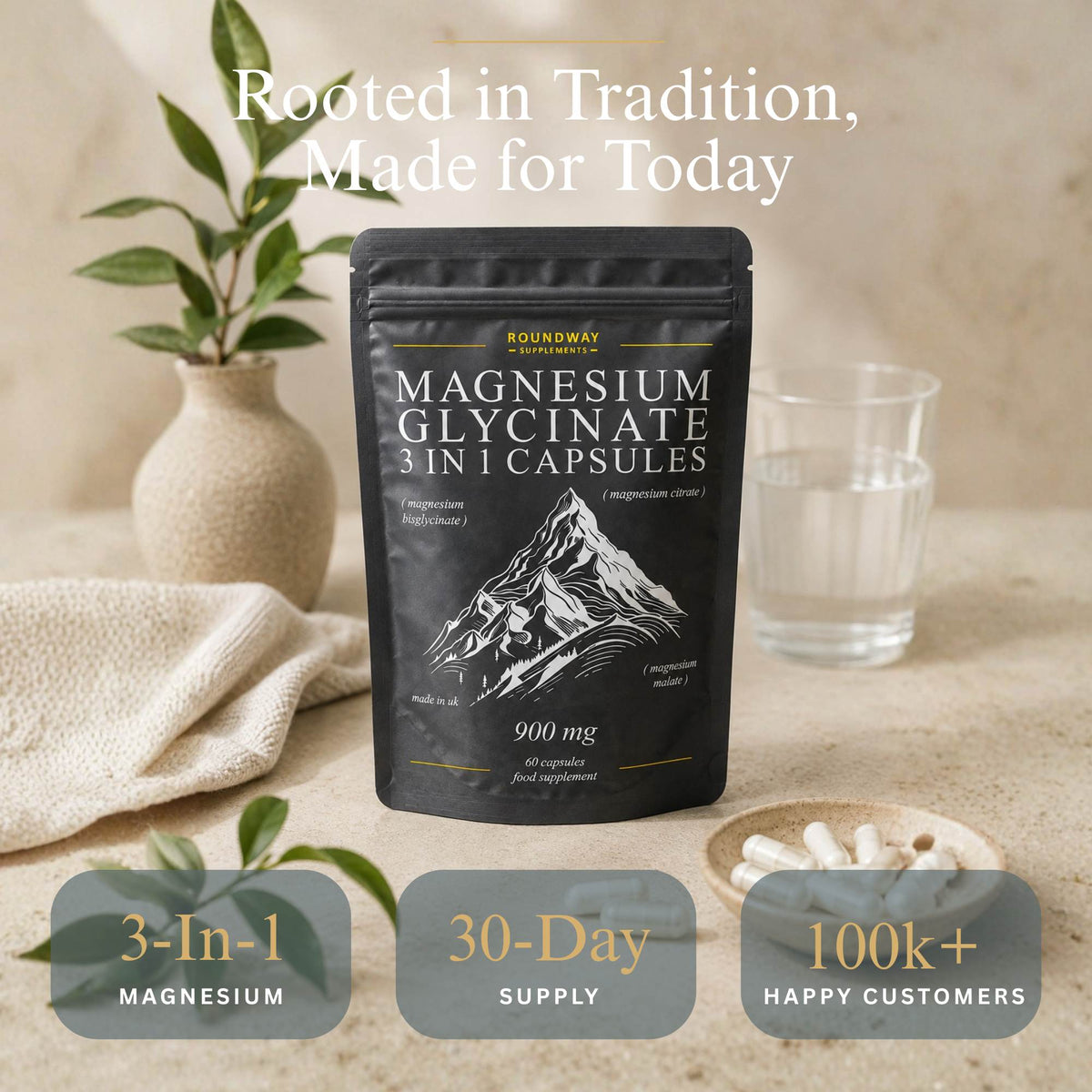
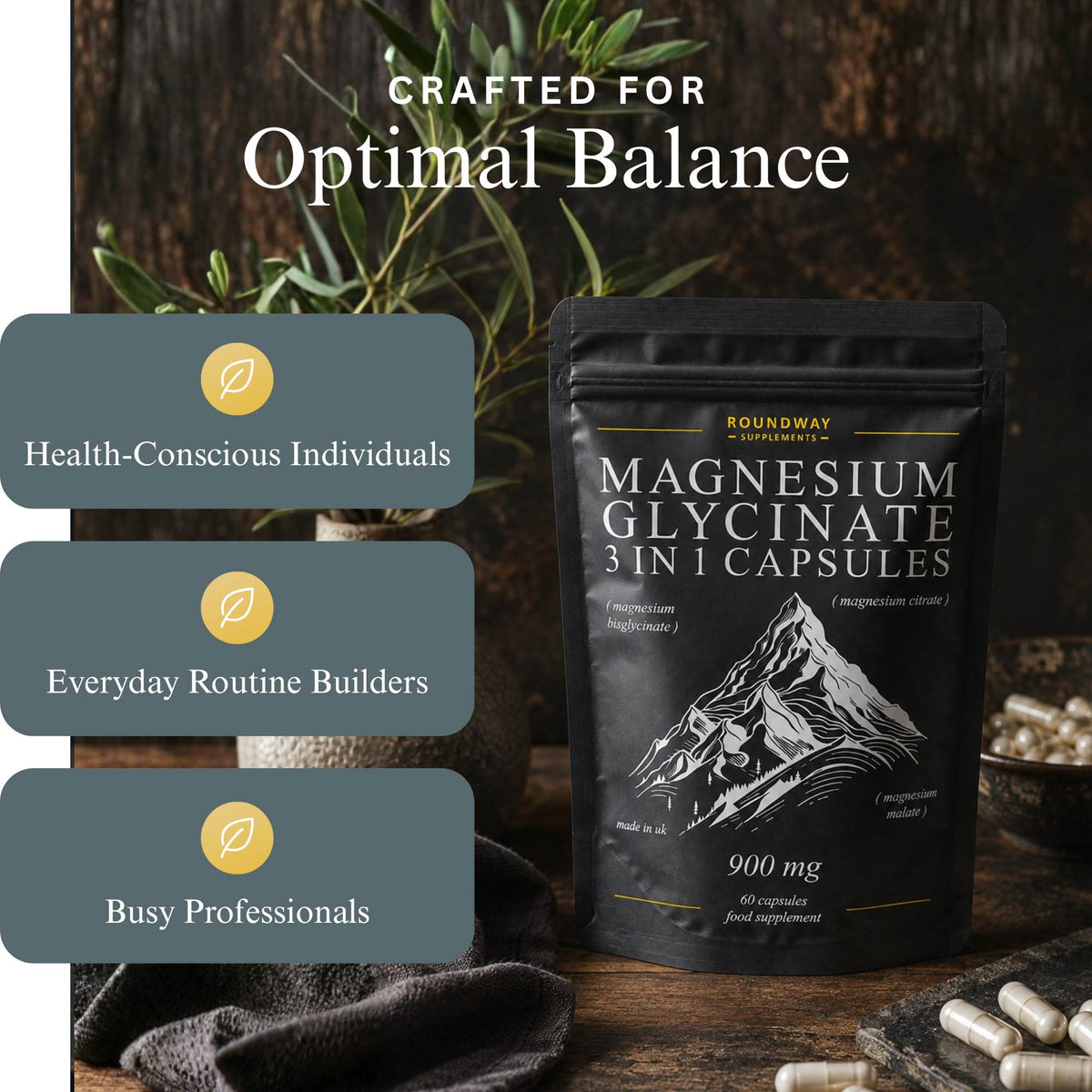
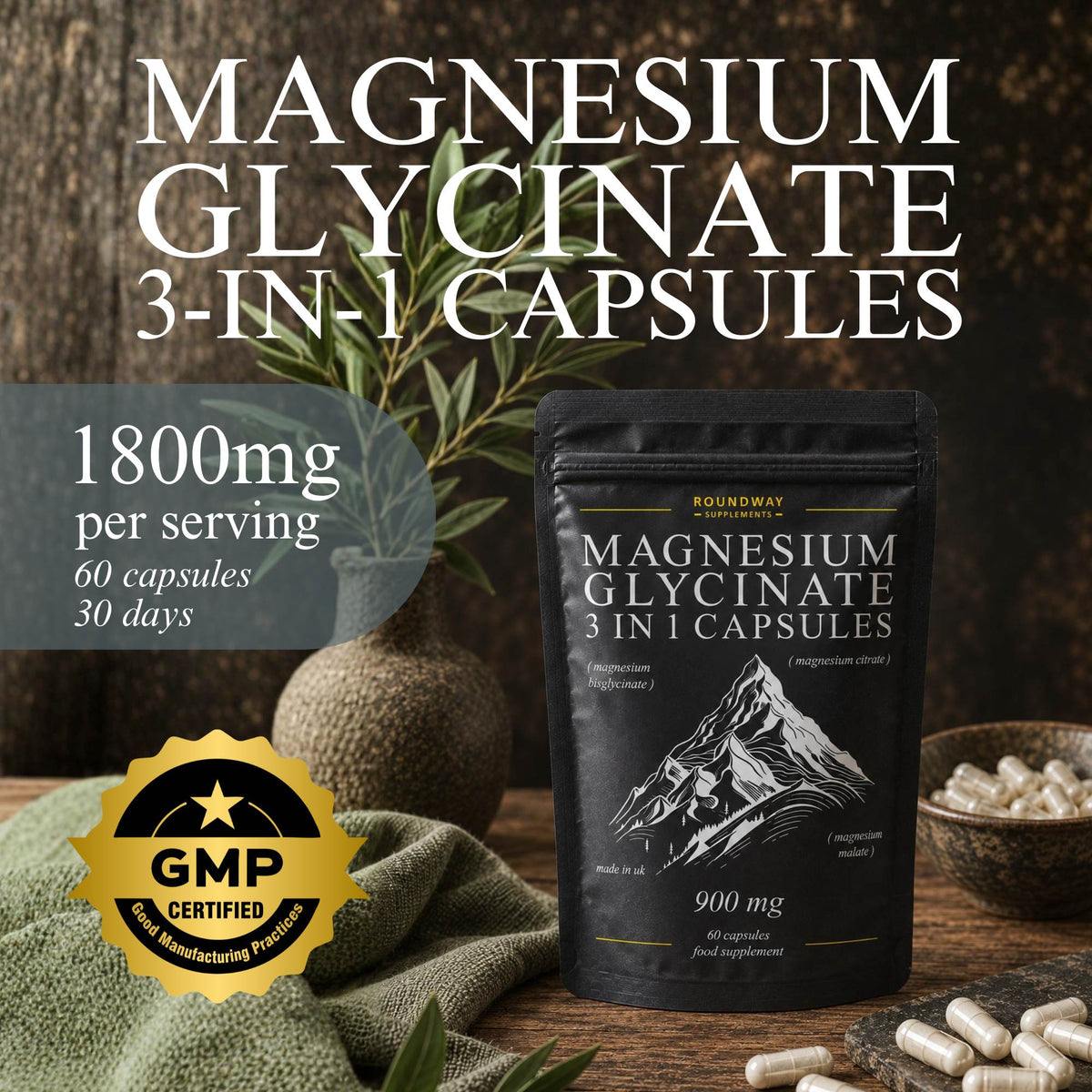
Roundway's Magnesium Glycinate 3-in-1 Complex brings together three highly bioavailable forms of magnesium: 1000mg Magnesium Bisglycinate, 400mg Magnesium Citrate, and 400mg Magnesium Malate per serving.

UK Made | Clean-Label | Travel-friendly
Free Gift
Free 3-in-1 Magnesium with every order over 25 GBP
Subscribe & Save
One-Time Purchase
Full refund within 60 days if it's not right for you.

SAME DAY DISPATCH if ordered by 2pm!

The science, in plain English

What magnesium is actually doing

Three jobs, explained without the hype.

Mechanism 01

Small minerals. Electrical jobs.

How it works

Electrolytes are minerals that carry an electrical charge when they dissolve in body fluids. Sodium, potassium, chloride and magnesium are among them, and their balance matters to how cells work normally.

The everyday context
HeatExerciseSweating
Where magnesium fits

Magnesium contributes to electrolyte balance.

Dissolved minerals carry charge Na⁺K⁺Mg²⁺Cl⁻Electrolytes in body fluids
Explanatory schematic, not measured results.
At a glance

The essentials

A daily magnesium supplement that combines three forms, bisglycinate, citrate and malate, providing 192mg of magnesium per vegan capsule.

Magnesium
192mg per capsule (51% NRV) · 384mg per two (102% NRV)
Forms per capsule
Bisglycinate 500mg · Citrate 200mg · Malate 200mg
Pack
60 capsules: 30 to 60 days
How to take
One to two capsules a day with water
Suitable for
Vegans and vegetarians. Not suitable for children
Capsule
Plant-based (hydroxypropyl methylcellulose)
Made in
The UK, to GMP standards
The problem
19in 100

people in their twenties in the UK get less magnesium from food than the lower reference nutrient intake. Women’s intakes were lower than men’s. Source: NDNS secondary analysis, Frontiers in Nutrition, 2018.

Easy to fall short on, hard to read on a label

Magnesium sits in the green of leafy vegetables and the heart of seeds, nuts, beans and wholegrains. Refining strips much of it out: white flour keeps a fraction of the magnesium in wholemeal. So the more of your week that comes from processed food, the less magnesium tends to come with it.

Then there is the label. Many magnesium supplements lead with the weight of the whole compound and leave you to work out the magnesium. We print both: three forms of magnesium, and exactly how much magnesium they give you in two capsules, so you can compare like for like.

What magnesium does

One mineral, seven jobs

Mgseven jobs
  • reduction of tiredness and fatigue
  • normal functioning of the nervous system
  • normal muscle function
  • normal energy-yielding metabolism
  • electrolyte balance
  • normal psychological function
  • maintenance of normal bones and teeth
Build a day

How far does your plate get you?

Tap the foods you ate today and watch them fill against the UK reference intake. Then add a serving to see where it lands.

What did you eat today?
0%of 300mg magnesium, from food
FoodTwo capsules
Where it fits

Magnesium contributes to the reduction of tiredness and fatigue and to normal muscle function.

Food values calculated from McCance and Widdowson’s Composition of Foods Integrated Dataset (CoFID), 2021. UK reference nutrient intakes: COMA, 1991.

The label

Everything in it, nothing hidden

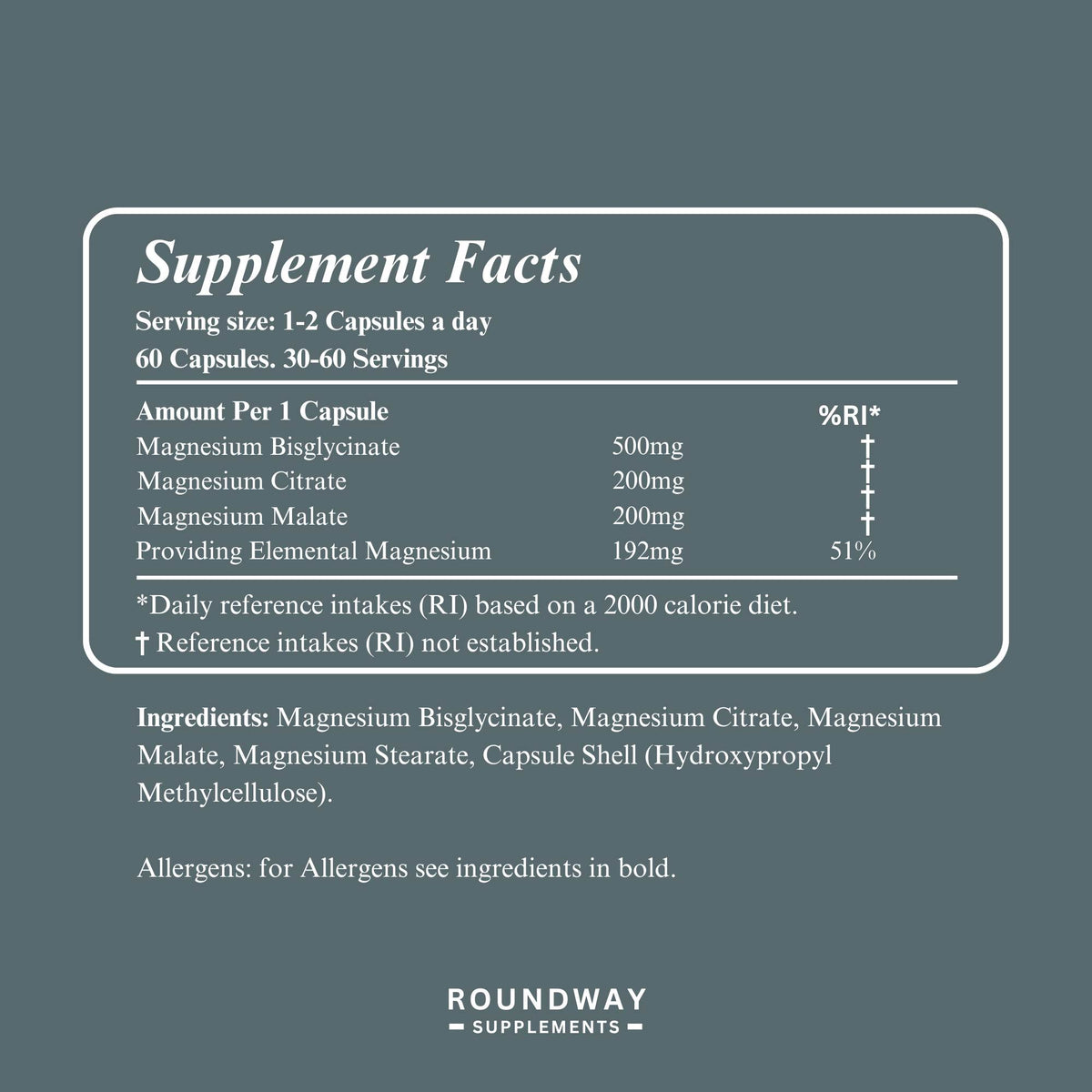
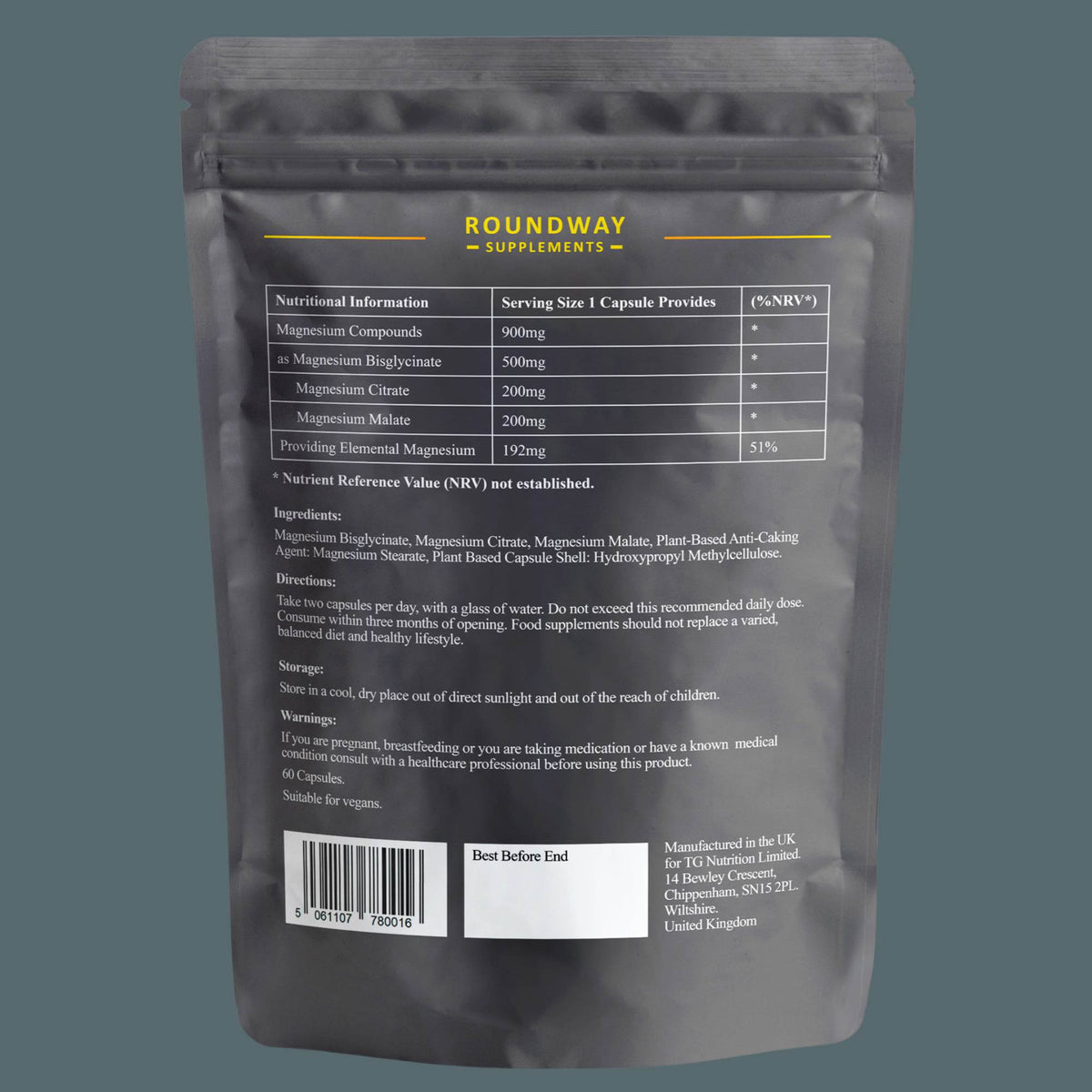
Three forms of magnesium in a plant-based capsule. Here is the full label, as printed on the pack.

Vegan capsuleMade in the UKGMP standards60 capsules
Nutrition information
NutrientPer capsulePer 2 capsules%NRV*
Magnesium bisglycinate500mg1,000mg—
Magnesium citrate200mg400mg—
Magnesium malate200mg400mg—
Providing magnesium192mg384mg102%

*NRV: nutrient reference value, shown for two capsules. One capsule provides 51%.

— No NRV established.

Wild oat stems in pale morning light framing a hazy cream and sage centre.
Inside one serving

Three forms, one daily amount

Bisglycinate1,000mg
Citrate400mg
Malate400mg

Three compounds on the label. 384mg of magnesium in two capsules: 102% NRV.

Want the long version? Read Magnesium, explained: forms, amounts and what the label means in the Roundway Journal.

Magnesium questions, answered

How much elemental magnesium is in each serving?
One capsule provides 192mg of magnesium (51% of the nutrient reference value) and two capsules provide 384mg (102%). It comes from magnesium bisglycinate, citrate and malate.
What is the difference between magnesium glycinate, citrate and malate?
Each is magnesium bound to a different carrier molecule: glycinate to the amino acid glycine, citrate to citric acid and malate to malic acid. The carrier changes the compound’s weight, which is why labels show both the compound and the elemental magnesium.
How much magnesium do adults need a day?
The UK reference nutrient intake is 300mg a day for men and 270mg a day for women. Supplement labels compare against a single reference value of 375mg.
How many capsules should I take?
Take one to two capsules a day with water, at a time that suits your routine. One capsule provides 192mg of magnesium and two provide 384mg. Do not exceed two capsules a day.
Is it safe to take magnesium every day?
The NHS says taking 400mg or less of magnesium a day from supplements is unlikely to cause any harm. Two capsules provide 384mg. Speak to your GP or pharmacist first if you take medication or have a medical condition.
What does magnesium do in the body?
Magnesium contributes to the reduction of tiredness and fatigue, normal muscle function, normal functioning of the nervous system, normal energy-yielding metabolism, electrolyte balance, normal psychological function and the maintenance of normal bones and teeth.
Is Magnesium Glycinate 3-in-1 vegan?
Yes. The capsule shell is plant-based (hydroxypropyl methylcellulose) and the formula is suitable for vegans and vegetarians. It is not suitable for children.
Which foods are high in magnesium?
Sunflower and pumpkin seeds, almonds, soya beans, spinach, brown rice and wholemeal bread are good sources. A 30g handful of sunflower seeds provides about 117mg.
Sources

Derbyshire E. Micronutrient intakes of British adults across mid-life: a secondary analysis of the UK National Diet and Nutrition Survey. Frontiers in Nutrition, 2018.

Department of Health. Dietary Reference Values for Food Energy and Nutrients for the United Kingdom (COMA report 41), 1991.

NHS. Vitamins and minerals: magnesium.

Office for Health Improvement and Disparities. McCance and Widdowson’s Composition of Foods Integrated Dataset (CoFID), 2021.

Food supplements should not be used as a substitute for a varied diet and a healthy lifestyle.