




Five ingredients, explained
Three plants and two compounds. Here is what each one is, and what the numbers on the label mean.
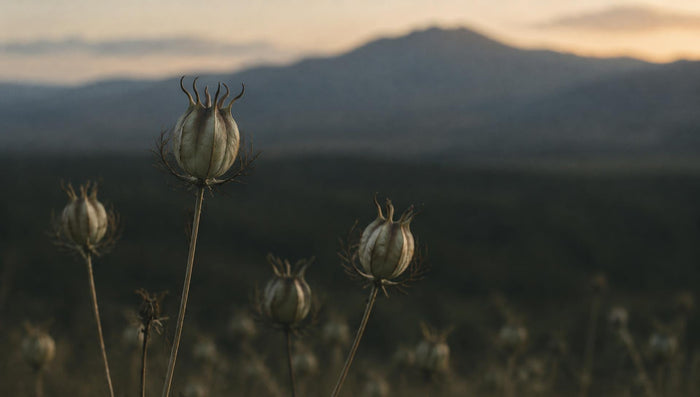
A thistle with white-veined leaves.
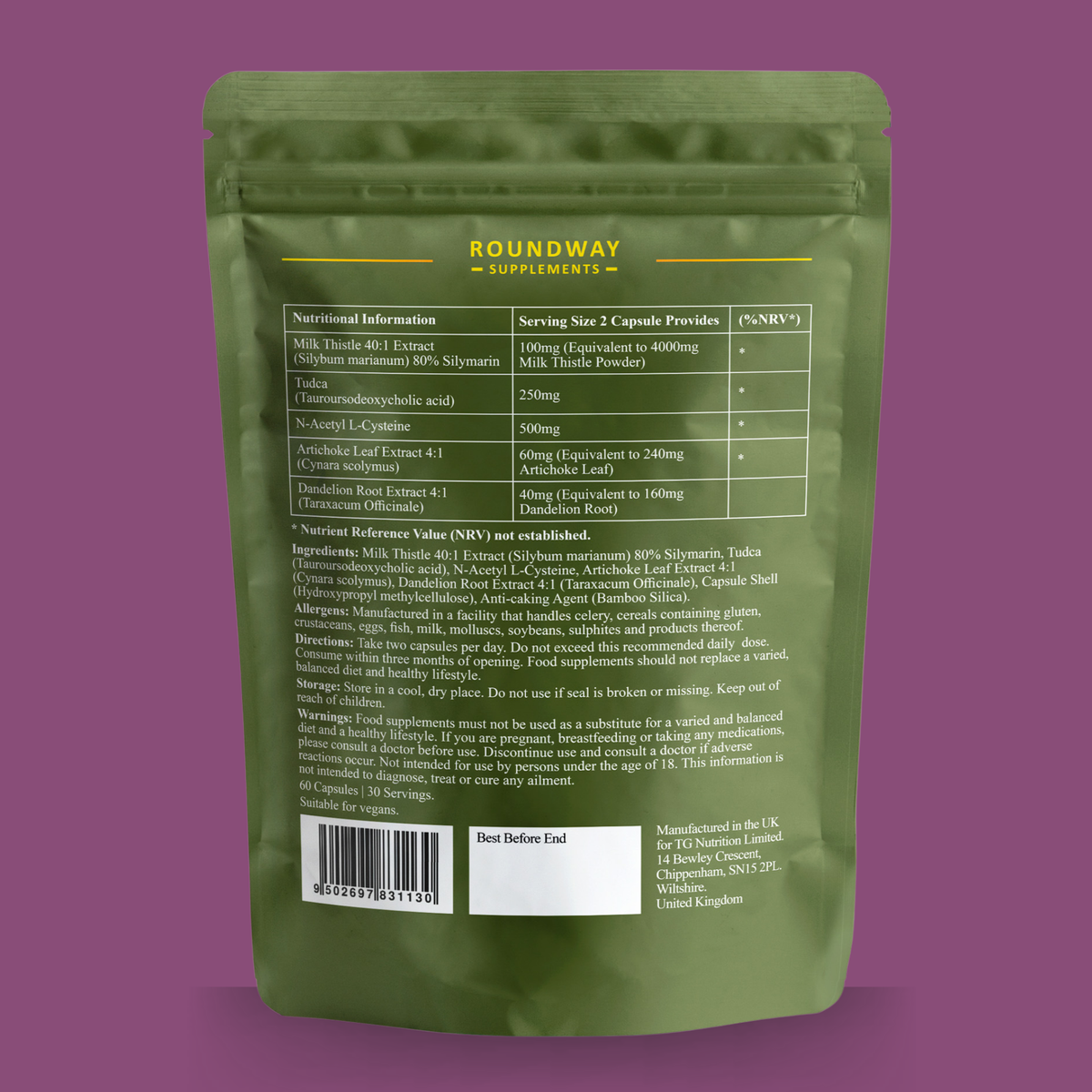
How it worksMilk thistle (Silybum marianum) is a tall purple thistle from the Mediterranean, now found wild across Europe. Its seeds contain silymarin, a group of compounds first isolated by German chemists in 1968. Our extract is concentrated 40:1 and standardised to 80% silymarin.
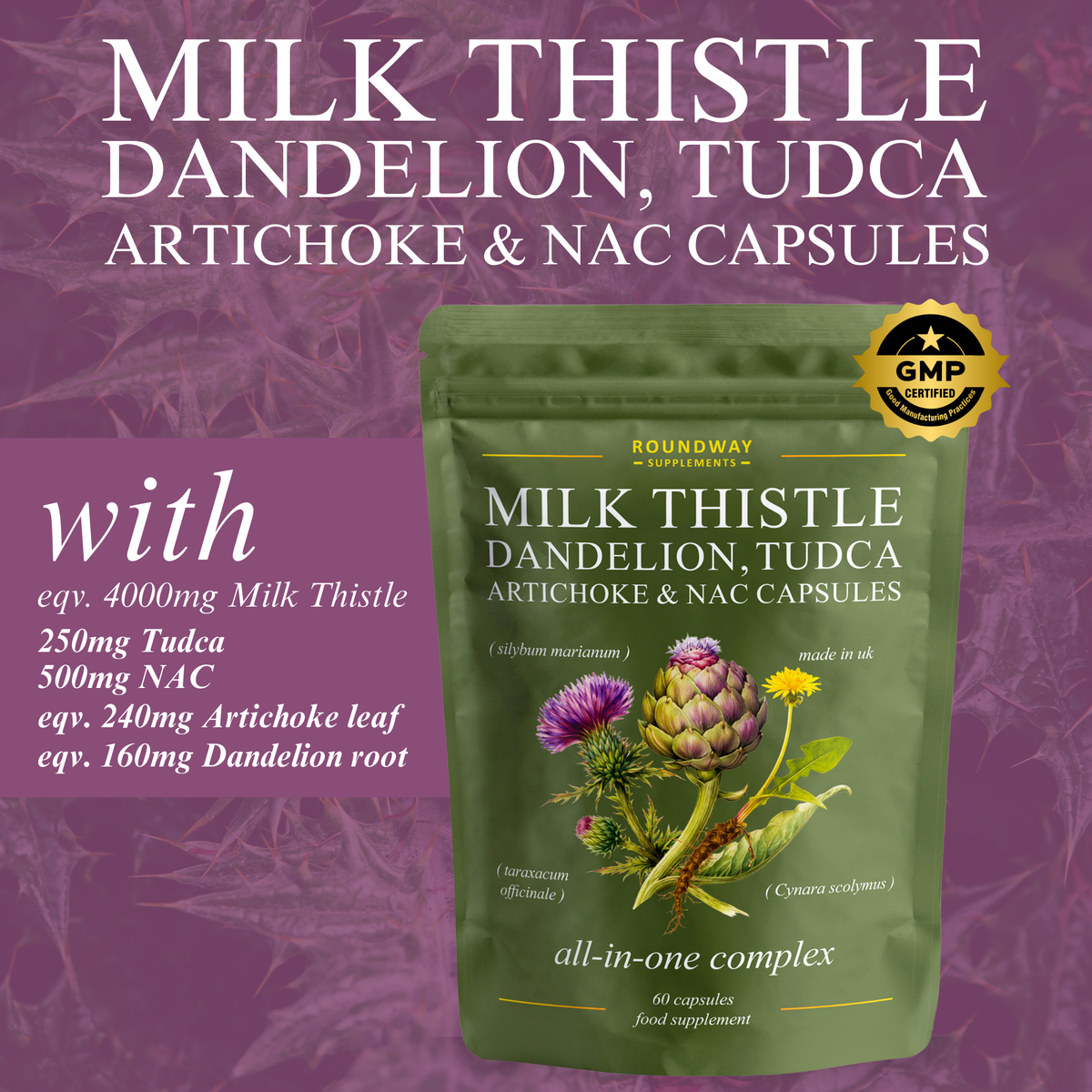
The everyday context100mg milk thistle extract, providing 80mg silymarin.
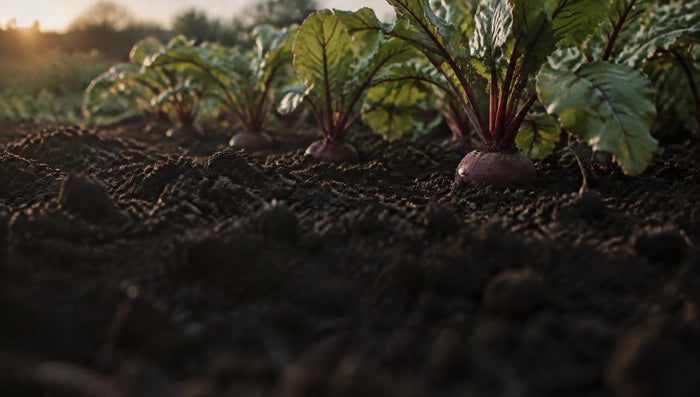
Two bitter plants, one leaf and one root.
How it worksGlobe artichoke (Cynara scolymus) is grown for its flower heads, but it is the leaf that is used here. Dandelion (Taraxacum officinale) is the familiar lawn plant; we use its root. Both are 4:1 extracts: four parts of plant to one part of extract.
The everyday context60mg artichoke leaf extract (from 240mg leaf) and 40mg dandelion root extract (from 160mg root).
A bile acid and an amino acid.
How it worksTUDCA (tauroursodeoxycholic acid) is a bile acid made of taurine joined to ursodeoxycholic acid; small amounts occur naturally in human bile. NAC (N-acetyl-L-cysteine) is a form of the amino acid cysteine with an acetyl group attached.
The everyday context250mg TUDCA and 500mg NAC.